Tuesday, 31 August 2010

Some More Notes on Ajrakh


1. True Ajrak or Ajrakh is only worn by men

Image Via Indianetzone.com

2. Ajrak printing can be applied to one side of the cloth called Ekpuri. Bipuri is double sided printing.

3. As these designs conform to Islamic design principles, they must not depict human or animal figures.

4. Saudagiri is the most highly documented genre of block design.

5. Riyal are those designs in Ajrak which are built around circular motifs.

6. True Ajrakh blocks are square, must matchup on all four sides, and also reflect to allow the reverse of the cloth to be printed.

7. Simples form of Ajrak has only one shade of red and blue. To apply additional shades of red, blue, yellow and green is called Meenakari.

You can read a brief description of the Ajrakh process here.

Now that you've finished reading this post, what are you going do? You should go join the Forum.

Monday, 30 August 2010

Difference among Lycra, Spandex and Elastane


"LYCRA® is DuPont's brand of elastane, or spandex. The word "spandex" is used only in the United States while "elastane" is recognized worldwide, so we tend to use the more widely known term."

Difference among Chiffon, Crepe, Crepe-de-Chine, Georgette, Organza,


Understanding Silk Fabrics: Organza, Chiffon, Crepe, Georgette, Crepe de Chine and Momme Weight

Silk fabrics are admired for their beauty, softness, sheen, drape, and elegance. However, not all silk fabrics behave in the same way. Some are crisp and transparent, some are soft and flowing, some have a pebbled surface, while others are sheer but comparatively stronger.

This article explains some important silk fabrics such as organza silk, chiffon silk, crepe fabric, crepe silk, crepe de Chine, georgette silk, and Kashmere silk. It also explains the meaning of momme weight, which is commonly used to describe the weight of silk fabrics.

Technical Note:
Many silk fabrics differ not only because of the fibre used, but also because of yarn twist, weave structure, fabric weight, and finishing. For example, chiffon, georgette, and crepe may all be made from silk, but their appearance and handle are different because of the twist and arrangement of yarns.

1. Organza Silk

Silk organza is a sheer, thin, open-weave fabric. It is heavier and crisper than silk gauze. It has a smooth, flat finish and is known for its stiffness, transparency, and structural quality.

The crispness of organza comes mainly from the use of tightly twisted yarns. Organza is usually made in a plain weave. The yarns may have around 10 to 20 turns per inch, giving the fabric its firm and wiry handle.

Organza is similar to cotton organdy in appearance, but organza is made with silk and is transparent. Because of its crisp drape, it is often used where volume, stiffness, or a transparent layer is required.

Common Uses of Organza Silk

Organza is used for veils, undergowns, bridal wear, evening dresses, overlays, decorative panels, and as a base fabric for embellishment. In Indian textiles and fashion, organza is also seen in sarees, dupattas, embroidered panels, and festive garments where a crisp transparent appearance is desired.

Practical Note:
Organza requires careful sewing. Since it is transparent, seams, facings, hems, and stitching lines may be visible from the outside. This is why finishing techniques become very important when stitching organza garments or saree blouses.

2. Chiffon Silk

The word chiffon literally means “rag” in French, but in textile usage it refers to an elegant, sheer, lightweight fabric with a soft and graceful drape.

Chiffon has a soft, supple, thin hand and a slightly crepe-like texture. It is generally made using a loose plain weave and tightly twisted single crepe yarns in both warp and weft.

Chiffon may be made from silk, cotton, nylon, polyester, rayon, or other fibres. However, silk chiffon is especially valued for its delicate appearance, lightness, and fluid fall.

Texture and Appearance of Chiffon

Chiffon is very light and diaphanous. It is sheer, delicate in appearance, and slightly rough to the touch because of the crepe yarns. Although it looks delicate, it can be a relatively strong and balanced fabric when properly woven.

The characteristic fine wrinkles in chiffon are created by the highly twisted yarns. In chiffon, the weft yarn may be either S twist or Z twist. This twist gives the fabric its soft crepe-like surface.

Common Uses of Chiffon

Chiffon is used for dresses, blouses, dupattas, scarves, millinery, lampshades, bridal gowns, evening wear, formal wear, nightgowns, and linings. In Indian garments, chiffon is very popular for sarees and dupattas because it falls softly around the body and gives a light, elegant appearance.

Practical Note:
Chiffon is difficult to cut and sew because it is light, slippery, and delicate. It may shift while cutting and may fray during stitching. Gentle handling and careful finishing are necessary.

3. Crepe Fabric

Crepe is a fabric characterized by a crinkled, puckered, pebbly, or rough surface. This surface effect is usually produced by using highly twisted yarns, especially in the weft, and sometimes in the warp or in both directions.

Crepe is usually made with a plain weave, although crepe effects can also be produced in other structures. The fabric may be soft and pliable, and its surface may range from fine and flat to rough, pebbled, mossy, or even bark-like.

Crepe fabrics can be made from natural fibres such as silk, cotton, and wool, as well as man-made fibres such as rayon, polyester, and nylon.

Why Does Crepe Have a Crinkled Surface?

The crinkled texture of crepe is mainly due to the use of high-twist yarns. When these yarns are woven and later finished, the twist tends to contract and create an irregular surface. This gives crepe its characteristic grainy or pebbled appearance.

Common Confusion:
Crepe is not one single fabric. It is a family of fabrics with a creped or crinkled surface. Crepe may be made from silk, polyester, rayon, cotton, or other fibres. Therefore, the word “crepe” describes the surface character more than the fibre itself.

4. Crepe Silk

Silk crepe is a luxurious silk fabric with a good sheen and a pebbly texture. This texture is obtained by using high-twist yarns.

Silk crepe has a beautiful drape and is widely used for dresses, slacks, skirts, lightweight suits, bridal gowns, and evening wear. It combines elegance with movement, making it useful for garments that need both fall and refinement.

In sarees, crepe silk gives a fluid drape and a slightly textured surface. It is often preferred where a graceful fall and subtle surface interest are desired.

5. Crepe de Chine

Crepe de Chine, pronounced “krape dee sheen,” is a French term meaning “crepe from China.” It is similar to silk crepe, but it is usually lighter in weight and less heavily textured.

Crepe de Chine is made with highly twisted S and Z filament yarns alternating in the weft, along with a normally twisted filament warp. This construction gives it a matte surface and a fine pebbled texture.

The surface of crepe de Chine reflects tiny points of light, giving the fabric visual depth and a refined appearance. It is known for its pleasing drape, durability, and good wrinkle resistance.

Common Uses of Crepe de Chine

Designers use crepe de Chine for elegant slacks, skirts, dresses, suits, blouses, scarves, and evening wear. It is lighter and smoother than many heavier crepes, making it suitable for garments where softness and elegance are important.

6. Crepe and Georgette Yarn

Crepe and georgette effects depend strongly on yarn twist. A crepe or georgette yarn is usually a highly twisted yarn, often with around 2000 to 3600 twists per meter. It may be made of two threads of raw silk.

A crepe yarn may generally have around 1200 to 4000 twists per meter. Such highly twisted yarns are used to produce crepe effects in woven or knitted fabrics.

Technical Note:
Twist direction is often described as S twist or Z twist. The controlled use of S and Z twist yarns helps create balance, texture, and the characteristic crepe or georgette surface.

7. Georgette Silk

Silk georgette is a fine, lightweight, plain-weave crepe fabric. It usually contains two highly twisted S yarns and two highly twisted Z yarns arranged alternately in both warp and weft.

Georgette is made from crepe yarn and has a grainy texture, sheer appearance, and a thin, dry hand. It is heavier than chiffon and is similar to silk crepe, but it is usually not as soft or lustrous as crepe.

Georgette is durable, but it can snag easily. It drapes very fluidly and falls into soft ripples, making it suitable for garments that need movement and flow.

Common Uses of Georgette Silk

Silk georgette is used for blouses, bias-cut flared skirts, dresses, evening wear, scarves, and sarees. It is also useful where a fabric must be sheer but slightly stronger and heavier than chiffon.

Georgette does not show pin marks easily and does not hold a sharp crease. However, it is relatively difficult to sew because of its light, creped, and fluid nature.

8. Kashmere Silk

Kashmere silk is a silk fabric made with a 2/1 right-hand twill weave. This weave structure gives the fabric a soft finish.

The twill weave creates a subtle diagonal effect and a smoother surface than plain weave fabrics. Such fabrics may be valued for softness, drape, and comfort.

Needs source verification: The term “Kashmere silk” may be used differently in different trade contexts. It is useful to verify whether the term refers strictly to a particular weave, a trade name, or a regional naming practice.

9. Momme Weight in Silk

Momme, often written as mm, is a traditional unit used to describe the weight of silk fabric. One momme is approximately equal to 3.62 grams per square yard or about 4.33 grams per square meter.

In simple terms, a higher momme value means a heavier silk fabric, while a lower momme value means a lighter silk fabric.

Approximate Momme Weight of Common Silk Fabrics

Silk Fabric Approximate Momme Weight General Character
Organza 4 to 6 mm Very light, crisp, sheer, stiff
Chiffon 6 to 8 mm Light, sheer, soft, flowing
Georgette 8 to 12 mm Sheer, grainy, heavier than chiffon
Crepe de Chine 12 to 18 mm Smooth, fine crepe texture, elegant drape

In increasing order of weight, these fabrics may be broadly arranged as:

Organza < Chiffon < Georgette < Crepe de Chine < Crepe

Practical Note:
Momme weight is especially useful when comparing silk fabrics for sarees, scarves, bridal wear, linings, and luxury garments. A lighter momme gives transparency and delicacy, while a heavier momme gives better body, durability, and fall.

10. Comparison of Organza, Chiffon, Georgette and Crepe de Chine

Fabric Transparency Handle Drape Surface Texture Typical Uses
Organza Very sheer Crisp and stiff Structured Smooth and flat Veils, overlays, undergowns, embellished sarees, bridal wear
Chiffon Very sheer Soft and delicate Flowing and limp Slightly crepe-like Sarees, dupattas, scarves, blouses, evening dresses
Georgette Sheer Dry and grainy Fluid with soft ripples Grainy crepe surface Sarees, blouses, dresses, scarves, flared skirts
Crepe de Chine Less sheer than chiffon Smooth and refined Soft and graceful Fine pebbled texture Dresses, suits, scarves, blouses, evening wear


11. Common Confusion: Chiffon vs Georgette

Chiffon and georgette are often confused because both are sheer, lightweight fabrics with a crepe-like effect. However, they are not the same.

Point of Difference Chiffon Georgette
Weight Lighter Heavier than chiffon
Feel Softer and thinner Drier and grainier
Drape Limp and flowing Fluid but with more body
Texture Fine crepe-like texture More pronounced grainy texture
Sewing Difficult due to slippery lightness Difficult, but generally more stable than chiffon

12. Relevance in Indian Textiles and Sarees

In Indian fashion and sarees, these fabrics are widely used because each fabric gives a different visual and draping effect.

A chiffon saree gives a soft, floating, graceful fall. A georgette saree gives a slightly heavier and more textured fall. An organza saree gives a crisp, transparent, and structured look. Crepe silk and crepe de Chine give a more refined, elegant drape with a subtle surface texture.

For merchandisers and buyers, understanding these differences is important because the fabric name alone does not explain the full product. Weight, twist, finish, transparency, embellishment, and end use must also be considered.

13. Frequently Asked Questions

Q1. Is organza softer than chiffon?

No. Organza is usually crisper and stiffer, while chiffon is softer, lighter, and more flowing.

Q2. Which is heavier: chiffon or georgette?

Georgette is generally heavier than chiffon. It also has a more grainy texture and slightly more body.

Q3. What gives crepe fabric its texture?

The crepe texture is mainly produced by highly twisted yarns. These yarns create a crinkled, pebbled, or puckered effect after weaving and finishing.

Q4. What is momme weight?

Momme is a traditional unit used to describe the weight of silk fabric. A higher momme value generally means a heavier silk fabric.

Q5. Which silk fabric is best for sarees?

There is no single best fabric. Chiffon is good for a light, flowing drape. Georgette gives more body. Organza gives a crisp and structured look. Crepe silk gives a graceful and elegant fall.

Conclusion

Organza, chiffon, georgette, crepe, and crepe de Chine are all important silk fabrics, but each has a distinct identity. Their differences come from weave, yarn twist, weight, texture, transparency, and finishing.

For students, designers, merchandisers, and textile professionals, these distinctions are important. A fabric is not understood only by its name, but by how it is made, how it feels, how it drapes, how it behaves during stitching, and how it performs in the final garment or saree.

Understanding these fabrics helps in better fabric selection, product development, garment construction, saree merchandising, and textile appreciation.

What is 8 kg Georgette


This represents the weight of 100 meters of Georgette. Thus technically it is an 80 gram georgette.

Sunday, 29 August 2010

Some Common Fabrics- Their Buying Specifications


FABRIC

COUNT/COUNSTRUCTION
SIZES
Cotton Voile 
78 x 68
48"


80 x 72
48"


92 x 80
48"


92 x 104
48"

Cambric

60 x 60 / 92 x 88
48"

Canvas

20 x 20 / 100 x 50
63"


20 x 16 / 104 x 50
63"


30 x 30 / 124 x 64
63"


2 / 40 x20 / 112 x 52
63"


2 / 40 x 2 / 40 / 92 x 72
63"


 2 / 40 x 2 / 40 / 108 x 56
63"

Corduroy

18 wales
38"
48"
58"


21 wales
38"
48"
58"


24 wales
58"


26 wales
58"

Cotton Velvet

2 / 40 x 14 Singles
48"


2 / 60 x 2 / 60
48"


2 / 30 x 14
48"

Cotton Flex

2 x 40 x 12 / 56 x 36
47"


2 x 40 x 12 / 56 x 40
47"


2 x 40 x 12 / 56 x 48
47"


2 x 40 x 12 / 56 x 52
47"


2 x 40 x 20 / 56 x 36
47"


2 x 40 x 20 / 56 x 40
47"


2 x 40 x 20 / 56 x 48
47"


2 x 40 x 20 / 56 x 52
47"

Casement

7 x 7 / 37 x 37
63"


2 x 20 / 2 x 20
63"

Denim

6 oz


7 oz


8 oz


10 oz


12 oz

Ducks

16 x 8 / 84 x 28
59"
63"
62"
72"
83"
 
10 x 6 / 76 x 28
63"

Drills

10 x 8 / 72 x 42
63"


16 x 12 / 108 x 56
63"


12 x 10 / 88 x 46
64"


2 / 40 x 2 / 20 /112 x 56
63"

Lycra Poplin

40 x 40 / 124 x 48
61"


40 x 40 / 124 x 56
61"


40 x 40 / 124 x 58
61"


40 x 40 / 124 x 64
61"


40 x 30 / 112 x 52
57"


50 x 40 / 140 x 60
61"


50 x 60 / 140 x 60
61"


50 x 60 / 140 x 52
61"

MossCrape 

10 Kg
50"


12 Kg
50"


13 Kg
50"

MossRayon

-
47"

Moss Satin

50"

Nylon Tafta

50"

PC

45 x 45 / 104 x 76
50"
63"


45 x 45 / 120 x 70
50"
63"


45 x 45 / 124 x 64
50"
63"


45 x 45 / 132 x 77
50"
63"


24 x 24 / 92 x 50
6

Thursday, 26 August 2010

Difference between organdy and organza


Both fabrics are transparent, crisp and woven with very fine, tightly twisted yarns in an open, plain weave. The difference between them is in the fiber content. Organdy is usually cotton or nylon, while organza can be made of silk, polyester or rayon. Organza is often used as a base fabric for embellishing. 

What is Matka


In multivoltine Bombyx cocoons, about 45% of the product is floss. This material is spun. Spun fiber of mulberry fed worm whether from pierced cocoon or waste fiber is called Matka.

http://mytextilenotes.blogspot.com

Saturday, 21 August 2010

What is Tone-on-Tone


The term tone on tone refers to a printed fabric that is made by combining different shades and tones of the same color. Tone on tone fabrics often appear to be solid when viewed from a distance, but their printed motifs become recognizable on closer inspection.

Wednesday, 18 August 2010

What Makes Kotpad a Unique Fabric


It is dyeing with Aul ( Al) Tree Root Bark that makes the Kotpad Fabric unique. In this area, roots of Al trees, which belong to Morinda genus are used for dyeing red color. Mainly the roots of Morinda citrifolia, Linn and Morinda coreia, Buch-Ham (earlier known as M. tinctoria,Roxb.) are used for dyeing red, maroon and brown colors The process of dyeing with Aul ( Al) Tree roots is as follows:

Al Dyeing Process

Pre-Dyeing Process

• Al roots are first dried and preserved. They are powdered just before dyeing.
• The yarn is first oiled using caster oil and ganji, the rice starch solution.
• Then it is treated in the solution of cow-dung and ganji and is dried in sun after it.
• When the yarn dries, it is sprinkled with kharpani, an ash solution prepared using ash of wood or residue of some of the local crops. The yarn is kneaded using either hand or feet. This process is continued three to four time each day for about 15 days.
• Then it is washed in river and dried. Now the yarn is bleached and is ready for dyeing.

Dyeing Red Color

• The bleached yarn is soaked in the solution made using powdered Al dye and water.
• It is then kept overnight in the dye vessel and boiled with the dye at least for one hour.
• The dried yarn is treated with Kharpani and dried again. This process is repeated thrice, which  deepens the red color.

Redyeing for Achieving Maroon Color

• Red dyed yarn is beaten and wetted using kharpani .
• Al powder is sprinkled on it on fera, the wooden plank.
• Then it is kneaded with legs and re-dyed by boiling in Al dye powder in the same manner as earlier.
• This second dyeing dyes yarn in maroon color.

Redyeing for Achieving Dark Brown Color

• To dye the yarn in dark brown color, the maroon dyed yarn is dyed third time using Hirakashi (  Iron Sulphate).


Now that you've finished reading this post, what are you going do? You should go join the Forum.

What Gives Mysore Silk its Uniqueness


Mysore silk is synonymous with the silk produced in the geographical area of Mysore district, thus fabrics made out of these silks are called Mysore silk.

More specifically, it is 100% pure silk woven in Crepe-de-Chine or Georgette. In Crepe-de-Chine the 26/28 Denier untwisted raw silk yarn is used in the warp and 26/28 Denier 2 ply twisted yarn is used in the weft. In Georgette, 26/28 Denier 2 ply twisted yarn is used both in warp and weft.

Here in Both Georgette and Crepe-de-chine, twist plays a very important role. The twist per inch varies from 400 TPM to 3000 TPM depending upon the end use of yarn. After twisting, twist setting is done by keeping the twisted yarn in a vacuum chamber and then letting the steam for 15-45 minutes depending upon the twist inserted.


Now that you've finished reading this post, what are you going do? You should go join the Forum.

What Gives Chanderi Fabric its uniqueness


The Chanderi Fabric is well-known for its transparency and sheer texture. 


The image above is via Chanderi Film

The transparency in Chanderi Sarees is a consequences of Single Filature quality of yarn used. Filature yarn is the quality of yarn when the glue of the raw yarn is not removed. The non degumming of the raw yarn given shine and transparency to the chanderi sarees. 

Now that you've finished reading this post, what are you going do? You should go join the Forum.

Tuesday, 17 August 2010

How to Identify Kota Doria


Kota Doria is a unique hand-woven fabric having a characteristic square-check pattern. The deft weavers of the cluster create it through differential beating of the silk and cotton yarns. Each square of 14 yarns (8 of cotton and 6 of silk) is termed as a ‘‘khat’’, and this is the hallmark of Kota Doria. A total of 300 ‘‘khat’s’ are there across the width of the fabric, which is up to 46 inches due to the usage of a throw shuttle technique on pit looms.

Monday, 16 August 2010

Tolerance Limit for Yarn Count in Khadi


There will be obviously a variation in the nominal yarn count. For this purpose the tolerance limit for variation will be as follows:


Coarse count (Up to 16 Ne) ± 10 %

Remaining count groups including Muslin ± 5 %


http://mytextilenotes.blogspot.com

Sunday, 15 August 2010

Warp Cover Factor in Khadi


Shirting 11 ± 10%

Bed sheet 11 ± 10%

Do suti 11 ± 10%

Dhoti/Sari 9 ± 10%

Cotton coating 12 ± 10%

Poly shirting 11 ± 10%

Poly coating 12 ± 10%


http://mytextilenotes.blogspot.com

Colorfastness Parameters for Khadi


Color_fastness_norms_for_khadi

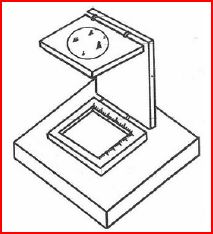
How to Use Pick Glass


How to Use a Pick Glass to Measure Reed and Pick in Woven Fabrics

A pick glass, also called a counting glass, is a small magnifying instrument used to count the number of warp and weft threads in a woven fabric. It is commonly used in textile laboratories, mills, buying offices, quality inspection departments, and classrooms to determine fabric construction.

In trade language, the terms reed and pick are often used while discussing woven fabric construction. In this context, reed generally refers to the number of warp ends per inch, and pick refers to the number of weft picks per inch. Technically, these are better described as:

Term Meaning Common Unit
Ends Warp threads running lengthwise in the fabric Ends per inch or ends per cm
Picks Weft threads running widthwise in the fabric Picks per inch or picks per cm
Reed In trade usage, often used to indicate warp thread density Usually ends per inch
Terminology note:
In strict weaving terminology, reed also refers to the loom reed used for spacing warp ends. However, in mill and trade conversation, “reed” is often used to indicate the number of warp ends per inch in the fabric. This article uses the term in that practical trade sense.


Purpose of Using a Pick Glass

A pick glass is used to determine the thread density of a woven fabric. It helps answer questions such as:

  • How many warp ends are present in one inch or one centimetre?
  • How many weft picks are present in one inch or one centimetre?
  • Does the actual fabric construction match the required specification?
  • Has the fabric changed after processing, washing, finishing, or relaxation?

The following procedure is based on the principles of IS 1963:1981, Methods for Determination of Threads per Unit Length in Woven Fabrics. Needs source verification against the latest applicable version before formal laboratory use.

Sampling Precautions

Before counting the threads, proper sampling is important. If the sample is not chosen carefully, the result may not represent the actual fabric construction.

  1. Avoid taking readings within 50 mm from the selvedge.
  2. Avoid taking readings within two metres from either end of a fabric piece or roll.
  3. Keep the fabric flat, smooth, and free from wrinkles.
  4. Do not stretch the fabric while measuring.
  5. Take readings from different places in the fabric to get a representative average.
Practical note:
The selvedge portion may have a different construction from the body of the fabric. Therefore, readings taken too close to the selvedge may give misleading results.

Special Case: Designed or Figured Fabrics

In designed fabrics, dobby fabrics, jacquard fabrics, extra-warp fabrics, extra-weft fabrics, and other figured constructions, counting may be more difficult because all threads may not appear uniformly.

For such fabrics, it is useful to:

  1. Determine the number of units in one weave repeat from a point paper diagram, if available.
  2. Count the number of complete repeats within the selected measuring distance.
  3. Count the remaining units beyond the complete repeats.
  4. From this information, calculate the number of warp or weft threads per centimetre or inch.
Technical note:
In plain fabrics, thread counting is usually straightforward. In figured fabrics, the count may need to be interpreted with reference to the weave repeat. This is especially relevant for decorative saree fabrics, brocades, jacquards, and extra-weft designs.

Procedure for Measuring Reed and Pick

  1. Place the fabric sample on a flat table.
  2. Smoothen the sample gently without stretching it.
  3. Set the pointer of the counting glass at zero.
  4. Place the counting glass on the fabric:
    • Parallel to the warp direction when weft density is to be counted.
    • Parallel to the weft direction when warp density is to be counted.
  5. Count the number of warp or weft threads in the specified measuring length.
  6. Repeat the same procedure in at least four more places on the fabric.
  7. Calculate the thread density using the formula given below.
  8. Calculate the average of all readings and report it as the thread density of the fabric.

Formula

The number of warp or weft threads per unit length is calculated as:

n = N ÷ L

Where:

  • n = number of warp or weft threads per centimetre or inch
  • N = observed number of threads in the measured distance
  • L = distance in centimetres or inches across which the threads are counted

Example

Suppose 32 warp threads are counted in a distance of 1 inch.

n = 32 ÷ 1 = 32 ends per inch

Therefore, the warp density of the fabric is 32 ends per inch.

Similarly, if 28 weft threads are counted in 1 inch, the weft density is 28 picks per inch.

Recording the Readings

A simple table may be used to record the readings before calculating the average.

Reading No. Warp Threads / Ends Weft Threads / Picks Unit
1 -- -- Per inch / per cm
2 -- -- Per inch / per cm
3 -- -- Per inch / per cm
4 -- -- Per inch / per cm
5 -- -- Per inch / per cm
Average -- -- Per inch / per cm

Important Precautions

  • Do not count the same set of warp or weft threads more than once.
  • Do not take readings from creased, stretched, or distorted areas.
  • Avoid the selvedge area.
  • Take readings from different positions in the fabric.
  • For threads per centimetre, the value may be rounded off to one decimal place.
  • For heavily textured, hairy, slub, fancy, pile, leno, or highly figured fabrics, counting may require extra care. Needs source verification for special fabric categories.
Practical example:
In saree fabrics, the body, border, and pallu may have different constructions. Therefore, if the purpose is quality checking, each area may need to be checked separately rather than assuming one reading represents the entire saree.

Common Confusion: Reed, Ends, and Picks

Expression Usually Means Clarification
Reed Warp ends per inch in trade usage Technically, reed is also a loom part used to space warp ends.
Ends Warp threads Counted lengthwise in the fabric.
Picks Weft threads Counted widthwise in the fabric.
Fabric count Ends and picks per unit length Used to describe woven fabric construction.

Conclusion

A pick glass is a simple but very useful tool for understanding woven fabric construction. By carefully counting warp ends and weft picks, one can check whether a fabric matches the required construction, compare different fabrics, or study changes caused by finishing, washing, or processing.

Although the method is simple, accuracy depends on correct sampling, proper alignment of the counting glass, avoiding distorted areas, and taking readings from multiple places. For formal testing, the relevant standard such as IS 1963 or an equivalent international standard should be consulted.

Reference

  • Bureau of Indian Standards. IS 1963: Methods for Determination of Threads per Unit Length in Woven Fabrics.
  • ASTM D3775: Standard Test Method for End (Warp) and Pick (Filling) Count of Woven Fabrics.
  • ISO 7211-2: Textiles — Woven fabrics — Construction — Methods of analysis — Determination of number of threads per unit length. 
  • Manual on Quality Assurance for Khadi, section on determination of thread density in woven fabrics.
  • Textile testing textbooks covering fabric count, end count, pick count, and fabric construction analysis.

Total Pageviews