Saturday, 28 January 2012

Some Common Synthetic and Blended Fabrics-1


Here is a list and pictures of some synthetic and blended fabrics

Satin


Satin is a type of glossy fabric.

It is commonly used in apparel : satin baseball jackets, athletic shorts, women's lingerie, nightgowns, blouses and evening gowns, but also in some men's boxer shorts, shirts and neckties.Other uses include interior furnishing fabrics, upholstery, and bed sheets.

Polyester Satin

They are available in the following weights:

GSM: 85, 100, 140, 160, 210, 230


Lycra Satin

A typical fabric has a composition of 97% Polyester with 3% Spandex, with specifications of 50D*75D+40S and with a fabric density of 250*104. Available in widths of 57"/58" with a weight of 90GSM .  Also available in 100, 120 and 140 GSM and widths of 42" and 44". 


Nylon Satin

 It is available in the GSM: 80, 100 with width of 42”, 44”. 


You can have a look here at the qualities running in grey fabric, yarns and finished products in Surat.

The following is a video depicting how to illustrate satin


Wednesday, 25 January 2012

Textile Testing Videos


Here are some of the videos on Testing of various textile properties. Please click the grey rectangle at the bottom of the video ( on right hand side) to see the total playlist.

In this playlist I have included the following videos:

1. Garment Seam Slippage
2.  Fabric Shrinkage
3. Fabric Yarn Count
4. Fabric Abrasion Resistance
5. Fabric Tensile Strength
6. Fabric Tear Strength
7. Fiber Strength Cotton


Thanks for your attention. Did you find the information you were looking for ? Please leave a comment. Do you need to know more ? Please suggest a topic in the comments. You can also join the Forum for your specific queries.

Sunday, 22 January 2012

How to instantly determine reed and picks per inch


When checking the fabrics like cotton sheeting, poplin, cambric, voile, lining and mull, it is often required that the reed and picks per inch are determined quickly. One way is to use the pick glass. However, it is inconvenient and taxing to count each and every thread. The other solution is the use of densimeter or lunometer.

Principle of Densimeter


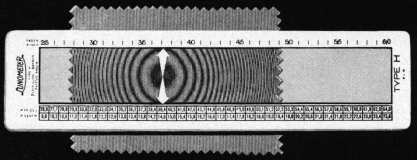
Moire Pattern
The densimeter is based on the principle that when very fine grids are placed one over the other than particular patterns are observed. In this case there are grating lines etched over the artificial glass. The density of grading lines go on increasing from left to right and is marked. When this grating is placed over the fabric, a point in the grating indicates a particular pattern when the density of grating matched with that of fabric. The position of this particular pattern is observed and the value of density is read from the grating.


Usefulness in Textile Testing

Densimeter can be used in atleast three ways

1. To measure the EPI and PPI of threads in the fabric
This works best when the fabric is grey and white. For dark and knitted fabric, the light source should be beneath the surface of the fabric in order to read patterns.

2. To measure the irregularity in the fabric
Presence of broken pattern of interference lines indicate variation in pick counts, differences in yarn count or color faults.

3. For measuring the shrinkage in the fabric
Instead of measuring the shrinkage in the fabric by marking, it is always better to check the number of threads at various position of the sample before and after the washing. This is particularly useful when shrinkage is checked in the made up garments.

How to use it
1.Place the sample on a flat surface. Put the densimeter above it.

2.Rotate the densimeter until a pattern develops as the lines on the densimeter interact with the lines formed by the threads.

3.Depending on how the densimeter is oriented,  the "Point" of the pattern will be pointing to a number on either the Lines per Inch scale or the Lines per Centimeter scale. The number on the scale indicates the thread or line count.


Thanks for your attention. Did you find the information you were looking for ? Please leave a comment. Do you need to know more ? Please suggest a topic in the comments. You can also join the Forum for your specific queries.

Monday, 16 January 2012

Factors influencing the cost of Processing


A very good treatment of the topic is given in this article


Thanks for your attention. Did you find the information you were looking for ? Please leave a comment. Do you need to know more ? Please suggest a topic in the comments. You can also join the Forum for your specific queries.

Total Pageviews