Sunday, 29 September 2024

Behind the Sarees: The Physical Toll of Being a Saree Seller


In the bustling world of textile retail, particularly in saree-selling shops in Ahmedabad, workers face unique occupational challenges that often go unnoticed. A recent study sheds light on the musculoskeletal disorders (MSDs) affecting saree sellers due to their long hours, repetitive movements, and awkward postures. Let's explore the findings of this insightful study and the potential interventions that could improve the working conditions of these workers.


The study, conducted on 56 saree sellers in Ahmedabad, reveals startling data about the physical toll this occupation takes. Nearly all participants (99%) worked eight hours a day, with a significant portion (70%) working seven days a week. These long hours, combined with repetitive movements and awkward postures, contribute to a high prevalence of musculoskeletal disorders, particularly in the lower limbs.

More than half of the workers (54%) reported experiencing pain in the past 12 months, with the most common issues occurring in the knees (17%) and ankles (7%). The repetitive action of getting up and sitting down, often more than five times daily, exacerbates these conditions. Workers reported comfort in positions such as cross-legged sitting or kneeling on the floor, but these postures can further strain the body over time.

Despite the high prevalence of MSDs, awareness and utilization of treatment options remain low. While 62% of the affected workers underwent surgical treatment, only a tiny percentage (7%) received physiotherapy. This suggests a need for increased awareness of non-invasive treatments like physiotherapy, which could significantly alleviate discomfort and prevent further complications.

The study emphasizes the need for ergonomic interventions in saree-selling shops. Adjusting workspaces to reduce awkward postures and incorporating regular breaks to minimize repetitive movements could go a long way in preventing musculoskeletal disorders. Implementing proper seating arrangements, ensuring that workers do not have to sit or kneel for extended periods, and educating them on proper posture and movement techniques could greatly improve their quality of life.

Saree sellers, like many workers in physically demanding jobs, are vulnerable to long-term health issues caused by poor ergonomics and strenuous working conditions. The findings of this study highlight the urgent need for ergonomic solutions and greater awareness of physiotherapy in this industry. By prioritizing the health of saree sellers, we can help reduce the incidence of musculoskeletal disorders and improve the well-being of these essential workers.

The full study, published in the International Journal for Multidisciplinary Research, serves as a wake-up call for better workplace practices in the textile industry, particularly for saree sellers who endure long hours and repetitive movements daily. Let’s strive to make their workplaces healthier and more supportive.


Buy my books at Amazon.com

Saturday, 25 May 2024

Revolutionizing Saree Shopping: How AI is Making Saree Texture Identification a Breeze


For centuries, sarees have been an integral part of Indian women's wardrobes[1,2,3,4]. These elegant garments come in a dazzling array of materials, each with its own unique texture and feel[5,6,7,8]. Traditionally, selecting the perfect saree involves touching and feeling the fabric, which is not always feasible with the rise of online shopping[5,9,10,11]. However, modern technology is stepping in to bridge this gap.

The Challenge of Choosing the Perfect Saree Online

One of the biggest challenges of buying sarees online is the inability to touch the fabric. With so many different materials available, from silk to cotton to chiffon, it's tough to know exactly what texture you're getting just by looking at a picture. This issue is compounded for those who might not have extensive experience with the various textures and types of saree materials.[12,13]

Enter Deep Learning: A Technological Solution

Thanks to rapid advancements in smartphone technology and artificial intelligence (AI), we can tackle this problem innovatively. Imagine being able to look at a photo of a saree and instantly know what texture it is made of. This is no longer science fiction but a reality made possible through deep learning.


How Does It Work?

A groundbreaking framework has been developed that uses deep learning to classify saree textures quickly and accurately. Here’s how it works:

1. Image Capture: You take a picture of the saree using your smartphone.
2. Mask RCNN: This advanced AI tool helps segment and identify the saree in the image by generating patches focusing on the fabric's texture.
3. VGG-16 Network: This is where the magic happens. The VGG-16 network, a type of deep learning model, analyzes these patches to accurately classify the saree texture.

Why Mask RCNN and VGG-16?

Mask RCNN is a state-of-the-art model for image segmentation. It ensures that the saree is accurately detected in the image, isolating the fabric from the background.[14] Once we have these precise patches, the VGG-16 network comes into play. This model is known for its robust performance in image recognition tasks. It processes the texture details in the patches and determines the saree material.[15,16,17,18]

Exceptional Accuracy

In a paper by D. S. Dakshina, Dr. P. Jayapriya, and R. Kala (source), the deep learning pipeline outperforms existing methods, achieving an impressive 97.41% accuracy in saree material classification. This means you can shop for sarees online with greater confidence, knowing that the fabric texture identified by the AI is almost always spot on.


The Future of Saree Shopping

With this technology, the traditional tactile experience of saree shopping can be brought to the digital world. You can make informed decisions about saree materials without physically touching them. This innovation is set to revolutionize how we shop for sarees, making it easier, faster, and more reliable.

The integration of deep learning into saree shopping is a game-changer. By harnessing the power of Mask RCNN and the VGG-16 network, a system is developed that accurately identifies saree materials from images. This enhances the online shopping experience and ensures that you get exactly what you expect. Say goodbye to the guesswork and hello to smarter saree shopping!

Bibliography:

1. Bhatnagar, Parul. Traditional Indian Textiles. Abhishek Publications, 2005.
2. Franck, Irene M., and David M. Brownstone. The Silk Road: A History. Facts on File, 1986.
3. Gordon, Beverly. Textiles: The Whole Story: Uses, Meanings, Significance. Thames & Hudson, 2011
4. Dehejia, Vidya. Indian Art. Phaidon Press, 1997.
5. Chishti, Rta Kapur, and Amba Sanyal. Saris: Tradition and Beyond. Roli Books, 2010.
6. Gillow, John, and Nicholas Barnard. Traditional Indian Textiles. Thames & Hudson, 2008.
7. Murphy, Veronica. The Indian Textile Sourcebook. A&C Black, 2011.
8. Naik, Shailaja D. Traditional Embroideries of India. APH Publishing, 1996.
9.    Barnes, Ruth, and Joanne B. Eicher. Dress and Gender: Making and Meaning in Cultural Contexts. Bloomsbury Publishing, 1997.
10. Pal, Pratapaditya. Indian Saris: Traditions - Perspectives - Design. Mapin Publishing, 2006.
11. Banerjee, Mukulika, and Daniel Miller. The Sari. Berg Publishers, 2008.
12. Sengupta, Joy. "E-commerce and Indian Fashion: How Digital Platforms Are Changing the Way We Shop." The Indian Journal of Business, vol. 22, no. 4, 2019, pp. 45-67.
13. Rathi, Meenal. "Challenges of Online Shopping for Traditional Wear in India." International Journal of Marketing & Technology, vol. 7, no. 5, 2018, pp. 115-128.
14. He, Kaiming, Georgia Gkioxari, Piotr Dollár, and Ross B. Girshick. "Mask R-CNN." Proceedings of the IEEE International Conference on Computer Vision (ICCV), 2017, pp. 2961-2969.
15. Simonyan, Karen, and Andrew Zisserman. "Very Deep Convolutional Networks for Large-Scale Image Recognition." arXiv preprint arXiv:1409.1556, 2014.
16. Russakovsky, Olga, et al. "ImageNet Large Scale Visual Recognition Challenge." International Journal of Computer Vision, vol. 115, no. 3, 2015, pp. 211-252.
17. Simonyan, Karen, and Andrew Zisserman. "Deep Convolutional Networks for Large-Scale Image Recognition." International Conference on Learning Representations (ICLR), 2015.
18. Yosinski, Jason, Jeff Clune, Yoshua Bengio, and Hod Lipson. "How Transferable Are Features in Deep Neural Networks?" Advances in Neural Information Processing Systems (NIPS), 2014.


Saturday, 20 April 2024

Handloom Weaving: Taking a Toll on the Joints !!!


In the ancient city of Varanasi, where tradition weaves its way through the fabric of daily life, handloom weaving stands as a testament to centuries-old craftsmanship. Yet, amid the intricate patterns and vibrant colors, a silent struggle unfolds—one that echoes through the aches and pains of the artisans themselves.

Picture this: hours spent hunched over, shoulders tense, back curved, as skilled hands move rhythmically across the loom. It's a scene of dedication and artistry, but also one fraught with risk. Poor posture, exacerbated by the demands of their craft, takes its toll on the bodies of handloom weavers, leading to a myriad of musculoskeletal problems.

A recent study done by Sunita Dixit, which is published titled “Anthropometric Measurement & Assessment of Occupational Ergonomic Risks of Handloom Weaving in Varanasi District” delves into this issue, shedding light on the physical challenges faced by these artisans. Through careful evaluation of anthropometric measurements and body mass index, researchers aimed to assess the physical fitness of handloom weavers. What they uncovered was illuminating—a high prevalence of musculoskeletal disorders, stemming from the prolonged hours of static work and awkward postures inherent in traditional handloom designs.

As reported by her “In traditional old looms, normally there is no workstation adjustability and adjustment of weaving height is difficult that causes the awkward postures of the upper body. Inappropriately designed hand tools and the kind of the task are the chief causes of awkward postures of wrists and fingers. “
As can be seen from the results a full 86% of the weavers surveyed have to work with the  postures which are in the top risk category. 

The findings underscore a pressing need for intervention. By understanding the ergonomic demands of handloom weaving and the strain it places on the body, we can pave the way for meaningful change. From redesigning traditional looms to accommodate healthier working postures to implementing targeted interventions aimed at mitigating musculoskeletal risks, there are actionable steps we can take to support the well-being of handloom weavers.

One crucial tool in this endeavor is the Rapid Entire Body Assessment (REBA), which offers a systematic approach to evaluating working postures and identifying areas for improvement. Through observations of handloom weavers in action, researchers assigned scores to various body parts, pinpointing areas of concern and highlighting opportunities for intervention.

At the heart of this research lies a simple yet profound question: Are handloom weavers suffering because of unnatural postures? The answer, it seems, is a resounding yes. But with awareness comes opportunity—the opportunity to advocate for change in the ergonomic design of the machines and other adjustment , to champion the well-being of artisans whose craft is not only a livelihood but a cultural heritage.

Tuesday, 9 April 2024

Is Tussar Silk Inferior to Mulberry Silk ?


In a paper entitled  "Study of property and structural variants of mulberry and Tussar silk filaments" by professor Mohan Gulrajani, one can get several hints which may lead to the answer to the question.


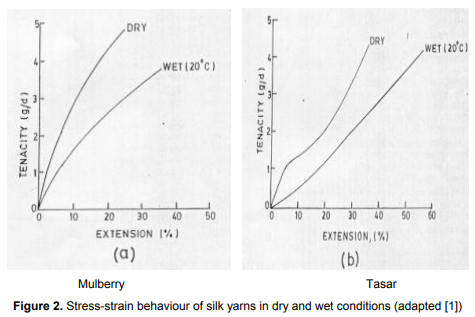
"A glance at the typical tensile behaviour reveals that the stress-strain curve of these two varieties is distinctly different, in that tasar shows a clear yield point and very high elongation compared to the mulberry filament."


Conclusion 1:  Tussar silk can undergo significant stretching before permanently deforming.

The tusar silk stress-strain curve exhibits a clear yield point. A yield point is a point on the stress-strain curve where the material transitions from elastic deformation (where it returns to its original shape after the force is removed) to plastic deformation (where it retains some deformation even after the force is removed). This suggests that Tussar silk can undergo significant stretching before permanently deforming. 

Conclusion 2:  Tussar can stretch a lot before reaching its breaking point compared to mulberry silk.

The stress-strain curve of tussar silk also shows very high elongation compared to mulberry silk. Elongation refers to how much a material stretches before breaking. The fact that tussar silk exhibits high elongation means it can stretch a lot before reaching its breaking point compared to mulberry silk.

In contrast, mulberry silk does not show as pronounced a yield point and has lower elongation compared to tussar silk. This implies that mulberry silk is less flexible and may have a more limited ability to stretch before breaking compared to tasar silk.

Why there is a difference in their properties

One answer can  be density.  The density of mulberry is higher ( 1.35 g/cc) as compared to tussar ( 1.30 g/cc). This suggests a relatively poor degree of orientation and less order in Tussar, which gives to lower modulus and elongation behavior of tussar.

These values have their commercial and functional implications. 

Can Silk be Machine Washed


At least a study suggests so. 

A paper titled "Study of property and structural variants of mulberry and Tussar silk filaments" by professor Mohan Gulrajani has suggested this idea. 

Earlier research suggested that the wet strength of silk specially Mulberry reduces considerably when subjected to water during laundering. This happens because in an aqueous environment, the hydrogen bonds between the molecules break. These bonds are crucial for maintaining the structure and strength of the fibers.

However the paper suggests that " silks can be machine washed at 40-60ºC provided one uses appropriate washing procedures, such as the use of neutral detergents".

The results for both Tussar and Mulberry found that " the tenacity and elongation at break are not
significantly different in dry or wet state ". However there is slight decrease in modulus. The figure given below talks about the result. 


A reduction in modulus would make the fiber less stiff.

Modulus, specifically in the context of materials science, refers to the measure of a material's stiffness or rigidity. It indicates the ability of a material to resist deformation under an applied force. Modulus is typically expressed in terms of stress divided by strain, where stress is the force applied per unit area, and strain is the resulting deformation.

When the modulus of a material decreases, it means that the material becomes less resistant to deformation for a given stress. In other words, it becomes more flexible or less stiff. Conversely, an increase in modulus would indicate that the material becomes stiffer or more resistant to deformation.

Then why it is not advised not to launder Pure silk sarees ?

The answer lies in the properties of commercially available silk fabrics or sarees. The above study was done after fully degumming the yarn. However, in commercially available silk fabric, the yarn is not fully degummed, there is always a residual gum or sericin. In the study about 20% sericin was found in mulberry and 5% in tussar.  On wetting, the sericin weakens, and allows inter filament slippage, which in turn leads to a drastic reduction in mechanical properties. Hence the strength of the wet silk gets reduced. 

What is sericin, what is silk fiber composed of ?

Silk fiber is primarily composed of two main proteins: fibroin and sericin. These proteins are produced by specialized glands in the silk-producing organisms, such as silkworms (Bombyx mori). The composition of silk fiber can vary depending on factors such as the species of the silk-producing organism and the conditions under which the silk is produced.

Fibroin: Fibroin is the structural protein that forms the core of silk fibers. It constitutes the majority of the silk fiber's mass and is responsible for its strength and resilience. Fibroin is a fibrous protein composed mainly of amino acids such as glycine, alanine, and serine. The exact composition and arrangement of amino acids within fibroin contribute to its unique mechanical properties, including its tensile strength and elasticity.

Sericin: Sericin is a glue-like protein that surrounds and binds the fibroin filaments together within the silk cocoon. It serves to protect the fibroin and provide cohesion to the silk fiber structure. Sericin is composed of various proteins and amino acids, with its composition varying depending on factors such as the silk-producing species. Sericin is typically removed from silk fibers during processing to improve their texture and appearance, leaving behind only the fibroin core.

In addition to proteins, silk fiber may also contain small amounts of other substances such as lipids, sugars, and minerals. These minor components can influence the properties of silk fibers but are present in much smaller quantities compared to fibroin and sericin.

Some Notes about Arani Sarees


 Source

1. Until 1995, only small motifs were created using 'Adai' or dobbies. Now bigger motifs with Jacquards are also in vogue.

2. Arani is located in the Tiruvannamalai district of Tamil Nadu.

3. In Tamil, Aru means river and Ani means adorning. Arani means a place made beautiful by rivers.

4. In Arani, still street sizing is practiced

5. These sarees are characterized by Korvai and Thazhampoo Rekku on the borders. 

In Hindi, "Thazhambu flower" is known as "केवड़ा फूल" (Kewda Phool). Kewda is a type of fragrant flower commonly used in perfumes, culinary preparations, and religious rituals in India. It is also known as Pandanus flower in English.

In the context of sarees, "ரேக்கு" (rekku) typically refers to the decorative borders or edges of the saree. These borders are often woven or embroidered onto the saree fabric and can vary in width and design. The term "rekku" is used to describe these intricate patterns or embellishments that adorn the edges of the saree, enhancing its beauty and elegance.


Thazhambu Flower

Thazhampoo Rekku

6. Both Frame looms and pit looms are used to weave the sarees. 

7. Arani weavers are mostly composed of Saurashtrians from Gujarat who came during the Vijayanagara Period. 

8. Arni Dobby sarees are lightweight and made with single color yarn using a fly shuttle. 

9. This region also produces Kumbakonam korvai Sarees

Kumbakonam Sarees

10. Arani Kottadi ( Checked pattern is very Popular)


Buy my books at Amazon.com

Sunday, 4 February 2024

Automatic Fabric Defect Detection: New Approaches


The blog post is based on the this article:

In the ever-evolving landscape of textile manufacturing, maintaining the highest fabric quality is paramount. Traditionally, defect inspection has relied on human visual scrutiny, often employing semi-automated methods. However, this approach is labor-intensive and costly, prompting the need for more efficient and cost-effective solutions. Enter automatic inspection systems for defect detection, leveraging cutting-edge technologies like artificial neural networks, threshold segmentation, structural, statistical, and model-based approaches, as well as computer vision methods. This article explores the various methods employed in automatic fabric defect detection and their impact on revolutionizing fabric quality control.

The Need for Automation in Fabric Inspection

Fabric defects can range from irregularities in the weave to discolorations and tears. Detecting these imperfections manually is not only time-consuming but also prone to human error. Automatic fabric inspection systems aim to streamline this process, offering a more efficient and reliable solution. The primary goals include reducing time and cost wastage associated with defects, ensuring consistent quality, and meeting the ever-growing demands of the textile industry.

Methodologies in Automatic Defect Detection

  1. Artificial Neural Networks (ANNs): Artificial Neural Networks have gained prominence in various fields, including fabric defect detection. ANNs mimic the human brain's structure, allowing them to learn and adapt to patterns. In fabric inspection, ANNs analyze large datasets of fabric images to identify and classify defects. The advantage lies in their ability to recognize complex patterns, making them effective in distinguishing subtle fabric irregularities.

  2. Threshold Segmentation: Threshold segmentation involves setting a threshold value to distinguish between defective and non-defective areas of the fabric. This method relies on pixel intensity, where variations beyond a certain threshold are classified as defects. While threshold segmentation is simpler compared to neural networks, it proves effective in detecting visible defects and is computationally less intensive.

  3. Structural and Statistical Approaches: Structural and statistical methods involve analyzing the fabric's structural features and statistical properties to identify defects. This may include analyzing the texture, thread density, and overall fabric composition. These methods offer a robust solution for defect detection, especially when combined with other approaches, providing a more comprehensive inspection.

  4. Model-Based Approaches: Model-based approaches involve creating mathematical models of defect-free fabric, enabling the system to detect deviations from the established norm. This method is highly adaptable and effective in identifying both subtle and prominent defects. However, it requires precise modeling and may be more computationally demanding.

  5. Computer Vision with Multi-Layer Neural Networks: Integrating computer vision with multi-layer neural networks represents a sophisticated approach to fabric defect detection. This method combines the strengths of computer vision for image processing and neural networks for pattern recognition. The result is a powerful system capable of accurately identifying and classifying various defects with high precision.

Empirical Outcomes and Benefits

Empirical evidence suggests that visualized approaches to fabric defect detection offer several key benefits. These include:

  1. High Analyzing Speed: Automatic fabric inspection systems exhibit remarkable speed in analyzing fabric for defects. This accelerated pace enhances production efficiency and allows manufacturers to meet tight deadlines without compromising on quality.

  2. Easy Utilization: The user-friendly nature of these systems ensures easy integration into existing manufacturing processes. Minimal training is required for operators to navigate and manage the automatic inspection systems effectively.

  3. Noise Immunity: Automatic defect detection systems are less susceptible to noise and external factors that may affect manual inspections. This ensures a more reliable and consistent evaluation of fabric quality, leading to a reduction in false positives and negatives.

  4. Meeting Requirements for Automatic Fabric Defect Inspection: Automatic fabric inspection systems effectively meet the stringent requirements of the textile industry. The combination of accuracy, speed, and ease of use positions these systems as essential tools for ensuring high-quality fabric production.

In conclusion, the integration of automatic fabric inspection systems represents a significant leap forward in fabric quality control. The diverse methodologies, ranging from artificial neural networks to model-based approaches, showcase the versatility of these systems in identifying defects with precision and efficiency. The empirical outcomes highlight the benefits of adopting such technology, including increased analyzing speed, ease of utilization, noise immunity, and meeting the industry's stringent requirements. As the textile industry continues to evolve, embracing these innovative solutions will undoubtedly play a pivotal role in enhancing overall fabric quality and production efficiency.

Case Studies

1. This study utilizes Fast Fourier Transform and Cross-correlation techniques for spatial domain analysis, followed by a thresholding operation to enhance defect detection accuracy. The approach is validated through simulations on plain fabric, optimizing parameters and considering noise. The proposed vision-based fabric inspection prototype aims for on-loom implementation, ensuring 100% coverage during fabric construction.

2. In this implementation to facilitate accurate inspection, a specialized LED system is employed to illuminate the fabric consistently and evenly. This lighting setup enhances visibility and aids in the precise detection of defects. Additionally, the system incorporates an encoder to measure fabric movement, ensuring synchronized data analysis.


Saturday, 3 February 2024

Kanchipuram Sarees: A case in Challenges in GI Certification


This thought-provoking article points out the fact that how GI certification is not complete, neither it does justice to the realities of production. Kanchipuram Sarees is taken as an example. I could take away two points from the study.

Point 1: Rhetoric of Authenticity 

The author talks about GI as a "rhetoric of authenticity influences how artisanal products are valued and marketed " as practiced in Europe.

Authenticity as a Value Proposition: In many markets, the perceived authenticity of a product can significantly enhance its value. Consumers often associate authenticity with quality, tradition, and the preservation of cultural heritage. This is particularly true for artisanal products, where the history, origin, and traditional methods of creation play a crucial role in defining the product's identity and appeal.

Marketing and Perception: Products marketed as "authentic" can attract a premium in the marketplace. This is because consumers are willing to pay more for items that are seen as genuine representations of a culture or tradition. The marketing of products often emphasizes their authenticity to tap into this consumer sentiment, highlighting traditional manufacturing processes, materials, and the cultural significance of the product.

Impact on Artisanal Products: For artisanal products like the Kanchipuram and Arani saris mentioned previously, authenticity becomes a key selling point. Kanchipuram saris, known for their quality and traditional designs, are seen as the gold standard. Saris that do not meet these traditional standards but are marketed under the same name occupy a different niche, appealing to consumers looking for something that appears traditional and authentic but is perhaps more affordable.

Challenges of Authenticity: The emphasis on authenticity also presents challenges. It can lead to strict categorizations of what is considered "authentic," potentially excluding products that innovate or diverge from traditional methods. Additionally, the demand for authentic products can lead to exploitation, where items are marketed as authentic without truly adhering to the traditional criteria, diluting the very concept of authenticity.

Cultural and Economic Implications: The rhetoric of authenticity affects not just the economic value of products but also cultural perceptions. It can elevate certain traditions and crafts to a status that commands respect and preservation, but it can also reinforce rigid definitions of culture that may exclude evolving practices.

Point 2: GI as a standard is destabilized in a production scenario

The Issue of Duplicates and Quality Variation: In the scenario you describe, the production of saris that are marketed under the umbrella of a GI-tagged product (like the Kanchipuram sari) includes versions that do not necessarily meet the high standards or specific criteria that the GI designation is supposed to guarantee. This situation arises when artisans produce variations of the sari that cater to different market segments, often altering the quality to meet different price points.

De-stabilization of the GI Standard: The introduction of such "duplicates" or varied quality versions of the GI-tagged product challenges the integrity of the GI standard. Since the GI tag is meant to assure consumers of a certain level of quality and authenticity tied to a geographical region, the presence of lower-quality versions under the same name can dilute the value of the GI tag and potentially mislead consumers.

Artisan Choice and Market Segmentation: Artisans face a choice between upholding the high standards associated with their GI-tagged products and adapting their practices to produce lower-cost versions for broader market segments. This choice reflects the economic realities and pressures of the market, where there is demand for products at various price points, not just the premium segment that seeks authentic, high-quality artisanal goods.

Implications for GI Policy and Enforcement: Your argument suggests a need for stricter enforcement of GI standards and possibly a reevaluation of how these standards accommodate or discourage variations in quality. It raises questions about the role of GI tags in protecting the reputation of traditional crafts and the livelihoods of artisans while also addressing consumer demand for affordable products.

Balancing Authenticity, Quality, and Accessibility: Ultimately, the challenge lies in balancing the preservation of traditional methods and quality associated with GIs with the need to make these products accessible to a wider audience. This balance requires careful policy considerations, education of consumers about what GI tags represent, and perhaps the introduction of tiered classifications within a GI to acknowledge different quality levels without compromising the integrity of the original GI product.

As quoted by Author:

A Case about Real Zari

"The fact that Kanchipuram is fast transforming from a silk weaving town into a retail hub is testimony to the rising demand for the “duplicate” Kanchipuram sari that is indifferent to or eludes the GI’s precise specifications. The phenomenon is an example of what Herzfeld (2005) calls “cultural intimacy” where rules are flouted with impunity. The office originally handling GI applications and enforcements in Kanchipuram is now non-existent and the fact that the zari testing machine is not accurate or has been re-calibrated to show only the desired and/or acceptable reading is common knowledge among both the producers as well as those in positions of authority."

A case about Korvai Technique

The injunction to employ the korvai or three-shuttle weave for solid borders in the GI has further exacerbated compliance. The korvai technique requires an apprentice weaver to assist in throwing the third shuttle. Often this apprentice is a younger member of the weaver’s own family contributing to the work in the process of acquiring the skill of silk weaving at an early age. The enforcement of the Child
Labor (Prohibition and Regulation) Act from the 2000s in Kanchipuram ensures that hiring young apprentices be forbidden by law. New entrants to silk weaving, usually those who have woven in cotton, are either not deft enough to assist in three-shuttle silk weaving or demand much higher wages (equivalent to those of a highly skilled weaver) for a supplementary task. Considered to be laborious, time consuming and not worth the effort, korvai weaving is therefore a difficult and costly proposition for many local producers in Kanchipuram.  Many producers have made representations to the government to replace the korvai obligation in the GI with newer, more popular, weaving techniques like the jangla, or patterned weave.

Thursday, 1 February 2024

Roadside Dyeing in India: How harmful is it for the Indian Dyers


This post is based on this Article

In a world where vivid colors weave into the very fabric of our lives, the unsung heroes behind these hues often face unseen challenges. Roadside dyers, integral to the textile industry, work tirelessly to bring color to our world. However, their occupation exposes them to serious health risks, a topic often overlooked but crucial in understanding the industry's human cost.

The Hidden Dangers of Chemical Dyes: Chemical dyes, known for their strong covalent bonds to textiles, are widely used for their durability and vibrant colors. Yet, these very attributes pose a significant health hazard to the dyers. Prolonged exposure to allergenic substances and irritant vapors from these dyes can lead to various health issues, from respiratory problems to skin allergies.

The Lack of Awareness and Safety Standards: The study reveals a concerning lack of awareness among dyers regarding the potential health risks associated with their profession. This casual attitude, coupled with inadequate occupational safety measures, puts them at an increased risk of health hazards. It's a wake-up call to the industry and authorities to prioritize the health and safety of these workers.

The Need for Immediate Action: The growing number of individuals in this unorganized sector highlights the urgent need for improved occupational safety and health standards. It's not just about providing protective gear or safer work environments; it's about educating the dyers on the risks and safe handling of these chemicals.

A Call for Change: This blog is a call to action - for industry leaders, policymakers, and consumers alike. As we embrace the beauty brought into our lives by these colors, let's not forget the hands that dye them. It's time to ensure that those hands are safe, healthy, and valued.

Saturday, 8 July 2023

Decoding the Hidden Meanings of the Indian Sari as a status symbol


We will first define and explain the vocabulary to explain the hidden meanings behind symbols. 

The study of signs and symbols and their meanings and interpretations is called Semiotics, also known as semiology . It is a field of study that focuses on understanding how communication occurs through various signs and symbols, including words, images, gestures, sounds, and objects. Semiotics examines the ways in which these signs and symbols are used to convey meaning, create understanding, and influence human behavior and perception.

At its core, semiotics explores the relationship between signs, the objects or concepts they represent, and the individuals or communities who interpret them. Signs can be divided into three main components:

Signifier: This refers to the physical form or representation of a sign, such as a word, an image, or a gesture.

Signified: This represents the concept or meaning associated with the signifier. It is the mental representation or idea evoked by the sign.

Interpretant: The interpretant refers to the understanding or interpretation that arises in the mind of the individual who encounters the sign. It involves making connections between the signifier and the signified.

Semiotics analyzes how signs function within different contexts, cultures, and social systems. It explores how signs are used to convey meaning, influence perception, and shape cultural identities. Semiotic analysis involves examining the relationships between signs, decoding their meanings, and understanding how they contribute to broader cultural and social systems of communication.

In summary, semiotics is a discipline that investigates the complex ways in which signs and symbols operate, and how they shape our understanding of the world and our interactions within it. It provides a framework for studying and interpreting the multifaceted nature of communication and the processes through which meaning is created and shared.

Having got a look at the structure to study symbols, lets turn our attention to sarees:

The Indian sari holds a prominent position within the Indian fashion system, representing a rich cultural heritage and an integral part of women's wear, particularly among lower-income groups. There is a  research study that focuses on the semiotics of the sari, delving into its meaning, symbolism, latent significance, and evolution. By examining the elements that influenced its development, this study aims to shed light on the semiotic significance of the Indian sari in relation to the changing status of lower-income group women in society.

The Indian sari serves as a powerful visual symbol that carries deep cultural and social meanings. By analyzing its evolving styles and trends, we gain insights into the shifting dynamics of Indian society, particularly for women from lower-income backgrounds. This research aims to uncover the hidden messages conveyed through the sari, deciphering its impact on the identity and empowerment of lower-income women.

Findings of the study
In understanding the social significance of the Indian sari, it is crucial to examine the shopping patterns and preferences of different socio-economic groups. The research reveals that lower-income women predominantly favor local shops and markets for purchasing their sarees. Exhibitions and malls are not as popular among this group. Additionally, online shopping and TV purchases are not widely adopted among lower-income women, contrasting with the middle and upper classes who embrace both "brick and click" saree shopping options.

Interpretation
The sari's semiotic significance is deeply intertwined with the evolving status of lower-income women in society. As their economic and social circumstances shift, so does their relationship with this iconic garment. The study highlights that the sari serves as a marker of tradition and identity for lower-income women, allowing them to assert their cultural roots and maintain a connection with their heritage. However, as socio-economic barriers gradually diminish, middle and upper-class women have embraced new saree shopping avenues, influenced by the growing accessibility and convenience of online shopping.


Source:https://www.provinciajournal.com/index.php/telematique/article/view/137 

Friday, 7 July 2023

Title: Ergonomic Concerns in Handloom Weaving- A Study


Handloom weaving, as one of India's oldest cottage industries, plays a significant role in the country's rural economy. It provides employment opportunities for a vast majority of rural workers. However, the nature of this industry is largely unorganized, and workers often face occupational health issues, particularly musculoskeletal disorders, due to prolonged working hours and adverse work postures. This article aims to explore the prevalence of musculoskeletal disorders and associated risk factors among silk saree workers, highlighting the ergonomic concerns in handloom weaving.

Study Methodology:
The study examined 206 silk saree workers using a modified Nordic Musculoskeletal Questionnaire method to assess the prevalence of musculoskeletal issues and identify associated factors. Additionally, ergonomic assessments were conducted using the Rapid Entire Body Assessment (REBA) and Rapid Upper Limb Assessment (RULA) techniques. These assessments helped identify risk variables and evaluate the impact of work postures on musculoskeletal problems during various stages of silk saree manufacturing.

Findings and Results:
The study revealed significant concerns regarding musculoskeletal disorders among handloom workers. The following are the key findings:

Yarn Extraction: Fifty percent of workers were found to have a very high risk of musculoskeletal issues during the yarn extraction process. This stage involves physically demanding activities that can strain the back, shoulders, and wrists.

Yarn Pre-Preparation: Approximately 73.33% of workers involved in yarn pre-preparation were identified as having a very high risk of musculoskeletal disorders. This process often requires repetitive motions and prolonged periods of sitting or standing, leading to strain on the neck, shoulders, and upper limbs.

Dyeing: A staggering 75.75% of workers engaged in dyeing reported a very high risk of musculoskeletal problems. The nature of this process involves heavy lifting, prolonged standing, and awkward postures, which can lead to back, shoulder, and wrist injuries.

Weaving: During the weaving process, 55.78% of workers were found to be at a very high risk of musculoskeletal disorders. This stage requires repetitive motions and sustained periods of sitting or standing, leading to strain on the neck, shoulders, and lower back.

Specific Process Risks:
Additionally, the study identified high risks in the following specific processes:

Warp Yarn Preparation: Forty-five percent of workers engaged in warp yarn preparation were found to experience high risks. This stage involves activities such as winding and stretching yarn, which can strain the upper body and cause repetitive strain injuries.

Weft Yarn Preparation: Approximately 78.05% of workers involved in weft yarn preparation were identified as having high risks. The nature of this process often requires repetitive motions and prolonged periods of sitting or standing, leading to strain on the neck, shoulders, and upper limbs.

Drafting of Warp Yarn: One hundred percent of workers involved in drafting of warp yarn reported high risks. This stage involves activities such as twisting and aligning yarn, which can strain the wrists, shoulders, and upper back.


The findings of this study highlight the urgent need for ergonomic interventions in handloom weaving to address the prevalence of musculoskeletal disorders among workers. The identified risks during various stages of silk saree manufacturing emphasize the importance of implementing ergonomic design principles and promoting healthy work practices. Employing techniques like REBA and RULA can aid in identifying risk factors and developing strategies to mitigate them. By prioritizing worker safety and well-being, the handloom industry can enhance productivity, reduce absenteeism due to work-related injuries, and create a sustainable environment for the future of this traditional craft.


Why Woolens should not be washed using ordinary soap or detergent


Wool is a unique natural fiber that requires special care when it comes to washing. Using ordinary soap or detergent can be detrimental to wool fibers and may result in damage or shrinking. Here's why wool should not be washed using ordinary soap:

pH Sensitivity: Wool fibers have a slightly acidic pH, typically ranging from 4.5 to 6.5. Ordinary soaps and detergents are often alkaline in nature, with a higher pH. Washing wool with alkaline products can disrupt the natural pH balance of the fibers, leading to damage, fiber weakening, and loss of elasticity.

Protein Structure: Wool is composed of protein fibers known as keratin. Alkaline substances, such as those found in regular soaps and detergents, can break down the protein structure of wool. This can result in the loss of wool's natural properties, including its softness, warmth, and resilience.

Felting and Shrinkage: Wool fibers have tiny scales on their surface that can interlock and cause felting when exposed to certain conditions, including agitation, heat, and alkaline substances. Ordinary soaps can agitate these scales and lead to the fibers binding together, causing shrinkage and irreversible damage to the fabric.

Harsh Chemicals: Ordinary soaps may contain harsh chemicals, optical brighteners, enzymes, or bleach that can be damaging to wool. These chemicals can strip the natural oils present in wool fibers, leaving them dry, brittle, and prone to breakage.

Instead of using ordinary soap, it is recommended to follow these guidelines for washing wool:

Use Wool-Specific Detergent: Choose a detergent specifically formulated for washing wool. These detergents are typically pH-neutral or slightly acidic, designed to protect the integrity of wool fibers.

Gentle Hand Washing: Wool garments are best washed by hand to minimize agitation and prevent felting. Gently swirl the garment in lukewarm water with a small amount of wool detergent.

Avoid Hot Water: Wool is sensitive to temperature changes. Use lukewarm water rather than hot water, as extreme temperatures can cause wool to shrink.

Rinse Carefully: Thoroughly rinse the wool garment in clean water to remove any detergent residue. Avoid excessive wringing or twisting, as this can damage the fibers.

Dry Flat: After washing, reshape the wool garment and lay it flat on a clean towel to air dry. Avoid hanging wool garments, as this can stretch and distort their shape.

By following these guidelines and using appropriate wool-specific detergents, you can ensure that your wool garments retain their quality, softness, and longevity without experiencing damage from ordinary soaps or detergents.

Buy my books at Amazon.com

Tuesday, 4 July 2023

How Cotton Fiber Absorbs Moisture


Cotton is a natural fiber composed of cellulose, which is a complex carbohydrate. The unique structure of cotton fibers allows them to absorb moisture effectively. Here's an explanation of how cotton absorbs moisture at an intermediate to advanced level:

Hydrophilic nature: Cotton fibers have a hydrophilic, or water-attracting, nature. This means that they have a natural affinity for water molecules. The hydrophilicity of cotton is attributed to the presence of hydroxyl (-OH) groups within the cellulose molecules. These hydroxyl groups form hydrogen bonds with water molecules, facilitating moisture absorption.

Capillary action: Cotton fibers possess a tubular or hollow structure with small gaps or voids between individual fibers. This structure allows for capillary action, which is the ability of a liquid to flow through narrow spaces against gravity. When cotton comes into contact with moisture, the water molecules are drawn into these tiny spaces through capillary action. This action helps to distribute the moisture throughout the fabric, increasing its absorption capacity.

Surface area: Cotton fibers have a high surface area due to their fine and irregular structure. The presence of numerous tiny crevices, twists, and turns in the fibers provides more surface area for water molecules to interact with. This increased surface area enhances the absorption of moisture by cotton.

Moisture retention: Once the water molecules are drawn into the cotton fibers, they are held there by various forces. The primary force responsible for moisture retention is hydrogen bonding. The hydroxyl groups on the cellulose molecules form hydrogen bonds with water molecules, effectively trapping them within the cotton fibers.

Porosity: Cotton fibers are relatively porous, allowing air to circulate through them. This porosity helps in the evaporation of moisture from the fabric, which aids in the drying process. When exposed to a dry environment or airflow, the absorbed moisture gradually evaporates from the cotton fibers, promoting the fabric's ability to stay dry.

Overall, the combination of cotton's hydrophilic nature, capillary action, high surface area, moisture retention through hydrogen bonding, and porosity contribute to its excellent moisture absorption properties. These properties make cotton a popular choice for various applications, including clothing, towels, and bedding, where moisture management and comfort are important factors.

Buy my books at Amazon.com

Why Silk Should be dry cleaned


Silk is a delicate and luxurious natural fiber that requires special care when it comes to washing. Using ordinary soap or detergent can be harmful to silk fabric and may result in damage or loss of its desirable properties. Here's why silk should not be washed using ordinary soap:

pH Sensitivity: Silk fibers have a slightly acidic pH, typically ranging from 5.5 to 6.5. Ordinary soaps and detergents are often alkaline in nature, with a higher pH. Washing silk with alkaline products can disrupt the natural pH balance of the fibers, leading to damage, loss of luster, and deterioration of the fabric.

Protein Structure: Silk is made up of protein fibers called fibroin. Alkaline substances, such as those found in regular soaps and detergents, can break down the protein structure of silk. This can result in the loss of silk's softness, smoothness, and strength.

Color Fading: Silk often comes in vibrant and delicate colors that can be susceptible to fading. Ordinary soaps may contain harsh chemicals, optical brighteners, or bleach that can fade or alter the color of silk fabric, leading to a loss of its original beauty.

Texture and Luster: Silk has a unique texture and natural luster that gives it its luxurious appeal. Ordinary soaps can strip away the natural oils and proteins present in silk, leading to a loss of its smooth and shiny appearance.

Instead of using ordinary soap, it is recommended to follow these guidelines for washing silk:

Hand Washing or Professional Cleaning: Silk garments are best washed by hand or professionally dry cleaned. If hand washing, use lukewarm water and a mild silk-specific detergent.

Gentle Agitation: Gently swirl the silk garment in the soapy water, avoiding any harsh rubbing or twisting that can damage the delicate fibers.

Quick Rinse: Thoroughly rinse the silk garment in clean water to remove any detergent residue. Avoid excessive wringing or squeezing, as this can distort the shape and texture of silk.

Drying: After washing, lay the silk garment flat on a clean towel to remove excess water. Avoid wringing or hanging silk to dry, as this can stretch or distort the fabric. Instead, roll the garment in the towel to absorb moisture, and then lay it flat to air dry away from direct sunlight.

By following these guidelines and using gentle silk-specific detergents or seeking professional cleaning, you can ensure that your silk garments retain their beauty, softness, and longevity without experiencing damage from ordinary soaps or detergents.

Buy my books at Amazon.com

Monday, 3 July 2023

Which Fiber has Wool-like properties


Acrylic fibers are synthetic fibers that are known for their wool-like characteristics. Despite being man-made, acrylic fibers are designed to mimic the properties and appearance of wool. Here's why acrylic fibers are considered wool-like:

Softness and Texture: Acrylic fibers are engineered to be soft and have a wool-like texture. They are often manufactured with a fine diameter and a crimped or curled structure, similar to natural wool fibers. This gives acrylic a fluffy and cozy feel, reminiscent of wool.

Warmth and Insulation: Acrylic fibers have excellent insulation properties, providing warmth and comfort similar to wool. They have low thermal conductivity, which helps to trap and retain body heat, making them suitable for cold weather garments.

Lightweight: Acrylic fibers are lighter in weight compared to wool. This makes acrylic garments more comfortable and easier to wear, especially for individuals who may find heavy wool garments too cumbersome.

Moisture Wicking: Acrylic fibers have the ability to wick away moisture from the body. While not as effective as natural wool, acrylic can help keep the wearer dry by drawing moisture away from the skin and allowing it to evaporate.

Dyeability and Color Retention: Acrylic fibers have good dye affinity, allowing for vibrant and long-lasting colors. They can be easily dyed in a wide range of hues, providing a variety of options for fashion and textile applications.

Resistance to Wrinkling and Shrinkage: Acrylic fibers are relatively resistant to wrinkling and shrinking, making them easier to care for compared to wool. Acrylic garments typically maintain their shape and size after washing, requiring less maintenance.

Durability and Abrasion Resistance: Acrylic fibers are known for their durability and resistance to wear and tear. They have a high tensile strength, making them less prone to breaking or pilling, which can be a common issue with nat Resistance to Wrinkling and Shrinkage ural wool fibers.

Allergen-Friendly: Acrylic fibers are hypoallergenic and generally do not cause allergic reactions or sensitivities in individuals with wool allergies. This makes them a suitable alternative for those who are sensitive to wool fibers.

While acrylic fibers share many similarities with wool, it's important to note that they are synthetic and do not possess all the natural properties of wool. Acrylic may not provide the same level of moisture regulation, breathability, or odor resistance as wool. However, the wool-like characteristics of acrylic make it a popular choice for various applications, including knitwear, blankets, and upholstery, where the desire for wool-like properties is coupled with affordability and easy care.

Buy my books at Amazon.com

Why sweat discolors some fabric


The phenomenon of colors changing when in contact with sweat is often observed in certain fabrics, particularly those that are dyed or treated with certain types of dyes or pigments. This color change can be attributed to several factors:

pH Levels: Sweat is slightly acidic, with a pH typically ranging from 4 to 6. Some dyes or pigments used in fabric coloring processes are sensitive to changes in pH. When sweat comes into contact with these dyes, the pH change can cause a chemical reaction that alters the color of the fabric. This reaction may result in fading, discoloration, or even the appearance of new colors.

Chemical Interactions: Sweat contains various chemicals, including salts, enzymes, and urea. These chemicals can react with the dyes or pigments used in fabric coloring. The interaction between the sweat components and the fabric dyes can cause color shifts or modifications, leading to changes in the perceived color of the fabric.

Moisture and Heat: Sweat is a combination of water and dissolved substances. When sweat is absorbed by fabric fibers, it can lead to an increase in moisture content. The moisture, combined with body heat, can create an environment conducive to chemical reactions, including those involving fabric dyes. This can result in color changes or fading.

Dye Fastness: The fastness properties of fabric dyes determine their resistance to color change when exposed to external factors, including sweat. If the fabric dye lacks good fastness to sweat, it is more prone to color changes upon contact with perspiration.

It's worth noting that not all fabrics are equally susceptible to color changes when exposed to sweat. The specific dyeing techniques, dye types, and dye-fastness properties of the fabric can greatly influence the degree of color change. Some fabrics, especially those that undergo proper dyeing processes or are treated with colorfast finishes, may exhibit minimal color change or remain relatively unaffected by sweat.

To minimize color changes caused by sweat, consider the following tips:

Choose Colorfast Fabrics: Opt for fabrics that are specifically labeled as colorfast or have undergone appropriate dyeing processes to enhance their resistance to color fading or changes.

Follow Care Instructions: Carefully follow the care instructions provided by the manufacturer to maintain the fabric's integrity. This may involve using mild detergents, washing at recommended temperatures, and avoiding excessive exposure to sweat or other harsh chemicals.

Pre-Wash or Test: Before wearing or using a new garment, it can be helpful to pre-wash or perform a colorfastness test on a small, inconspicuous area to check for any potential color change issues.

Rinse After Sweat Exposure: If you know that your fabric has been exposed to sweat, rinse the affected area with water as soon as possible to minimize the potential for color transfer or changes.

By understanding the factors that contribute to color changes in fabric when exposed to sweat and taking appropriate precautions, you can help preserve the original color and appearance of your garments.

Buy my books at Amazon.com

Why Natural Dyed Fabrics are Not color Fast


Natural dyes, derived from plant sources or other natural materials, are known for their vibrant and diverse color palette. However, compared to synthetic or chemical dyes, natural dyes generally exhibit lower colorfastness. Here are some reasons why natural dyes may not be as colorfast:

Chemical Composition: Natural dyes are composed of complex mixtures of organic compounds present in plant materials. These compounds can be sensitive to factors such as light, pH, and washing, leading to color fading or changes over time.

Lack of Fixation Agents: Natural dyes often require the use of mordants or fixatives to enhance their colorfastness. Mordants help bind the dye to the fabric fibers, improving its resistance to fading. However, the availability and effectiveness of mordants for natural dyes can vary, resulting in varying degrees of colorfastness.

Light Sensitivity: Many natural dyes are sensitive to light and can fade when exposed to prolonged sunlight or artificial light sources. This light sensitivity is attributed to the degradation of the color molecules present in the dyes.

pH Sensitivity: Natural dyes can be sensitive to changes in pH levels. Factors such as the alkalinity or acidity of the environment or the washing detergent used can influence the stability and colorfastness of natural dyes.

Washing and Care: Natural dyes can be more susceptible to color loss or bleeding during washing compared to synthetic dyes. Harsh washing methods, including the use of strong detergents or high temperatures, can accelerate color fading or bleeding.

Variability in Plant Sources: Natural dyes obtained from different plant sources or batches can exhibit variations in their dye composition and quality. This variability can impact colorfastness, as different dye components may have different stability and resistance to fading.

Despite the challenges with colorfastness, natural dyes are still valued for their unique and environmentally friendly qualities. There are ongoing research and efforts to improve the colorfastness of natural dyes through advancements in dyeing techniques, mordanting processes, and the development of natural dye extracts or formulations.

To enhance the colorfastness of natural dyes, certain steps can be taken:

Pre-treatment and Mordanting: Proper pre-treatment of fabric and the use of suitable mordants can improve colorfastness by enhancing the binding of natural dyes to the fibers.

pH Control: Maintaining a stable pH environment during dyeing and subsequent washing can help preserve the color intensity and stability of natural dyes.

Avoidance of Harsh Washing: Gentle washing techniques using mild detergents, cold water, and minimal agitation can help minimize color loss or bleeding.

Protection from Light: Limiting exposure to direct sunlight or storing natural dyed textiles in dark or shaded areas can help reduce color fading caused by light.

While natural dyes may have lower colorfastness compared to synthetic dyes, they offer unique aesthetic qualities and can be appreciated for their sustainable and eco-friendly nature.

How Mordant Printing Works


Mordant printing, also known as resist printing or block printing, is a traditional textile printing technique that involves the use of mordants to create patterns or designs on fabric. It is a method commonly used with natural dyes to enhance colorfastness and create intricate and vibrant designs.

Here's how mordant printing works:

Selection of Fabric: Mordant printing can be done on various types of natural fibers, such as cotton, linen, silk, or wool. The fabric is usually prepared by washing and scouring to remove any impurities or finishes that may interfere with the dyeing process.

Preparation of Mordant: A mordant is a substance that helps fix the dye to the fabric, improving colorfastness and enhancing the bond between the dye and the fibers. Commonly used mordants include alum (potassium aluminum sulfate), iron salts (ferrous sulfate), or tannin extracts from plants.

Application of Mordant: The mordant is applied to the fabric before dyeing. This can be done in different ways, such as brush painting, block printing, or screen printing. A design or pattern is created by applying the mordant to specific areas of the fabric. The mordant acts as a resist, preventing the dye from penetrating those areas.

Dyeing Process: After the mordant is applied, the fabric is ready for dyeing. Natural dyes extracted from plant sources or other natural materials are prepared and applied to the fabric. The dye adheres to the areas of the fabric that are not treated with the mordant, resulting in a color contrast between the mordanted and non-mordanted areas.

Fixation and Washing: Once the fabric is dyed, it is usually left to cure or undergo a specific treatment to ensure the dye is properly fixed to the fibers. This may involve heat setting, steaming, or prolonged curing. After fixation, the fabric is thoroughly rinsed to remove any excess dye and mordant residues.

The mordant serves multiple purposes in the printing process. It acts as a bonding agent between the dye and the fabric, enhancing the colorfastness and durability of the design. Additionally, mordants can also alter the color of the dye, resulting in different shades or tones. For example, iron mordants can darken or shift the color towards gray or black, while alum mordants can brighten or intensify certain colors.

Mordant printing allows for intricate and precise designs to be created on fabric, as the mordant acts as a barrier, preventing the dye from spreading beyond the desired pattern. This technique has been used for centuries and is still practiced today, especially in traditional and artisanal textile production.

It's important to note that mordants can have potential environmental and health impacts if not used and disposed of properly. It is recommended to follow safe handling practices and adhere to local regulations when working with mordants and natural dyes.

Sunday, 2 July 2023

Why cotton becomes strong when in water


Cotton fibers have a unique behavior when exposed to water. Instead of weakening like viscose, cotton fibers actually become stronger when wet. This phenomenon is often referred to as "wet strength" and can be attributed to the following factors:

Swelling and Fiber Alignment: When cotton fibers come into contact with water, they absorb moisture and undergo a swelling process. The fibers expand as water molecules penetrate the spaces between the cellulose chains. This swelling causes the fibers to align more closely, increasing their overall strength and resistance to pulling forces.

Hydrogen Bonding: Cotton fibers contain hydroxyl groups (-OH) that can form hydrogen bonds with water molecules. These hydrogen bonds contribute to the intermolecular forces within the cotton fiber structure. When the fibers absorb water, additional hydrogen bonds form between the cellulose chains, enhancing the fiber's strength.

Capillary Action: Cotton fibers possess capillary structures, allowing them to absorb and hold water efficiently. This capillary action helps distribute the water evenly across the fiber length, facilitating the formation of hydrogen bonds throughout the fiber structure. The capillary effect also assists in moisture transportation, promoting better moisture management in cotton textiles.

Molecular Structure: The inherent molecular structure of cellulose in cotton fibers contributes to their strength in wet conditions. The arrangement of cellulose chains provides a strong and stable fiber structure, even when exposed to moisture. The high degree of crystallinity and intermolecular bonding in cellulose contributes to the wet strength of cotton fibers.

Dyeing and Finishing Processes: In some cases, cotton fabrics may undergo dyeing and finishing processes that enhance their wet strength. These processes can involve treatments with specific chemicals or additives that improve the fiber's ability to maintain its strength and integrity when wet.

It's important to note that while cotton fibers generally exhibit increased strength when wet, excessive agitation, harsh chemicals, or prolonged exposure to water can still weaken or damage the fibers over time. Proper care, including gentle washing methods and avoiding harsh chemicals, is essential to maintain the long-term strength and integrity of cotton textiles.

In summary, cotton fibers become stronger when in water due to factors such as swelling, fiber alignment, hydrogen bonding, capillary action, and the inherent molecular structure of cellulose. This wet strength property of cotton makes it a favorable choice for various applications, including textiles that require durability and performance in moist environments.

Buy my books at Amazon.com

Why viscose becomes weak when in water


Viscose, also known as rayon, is a type of regenerated cellulose fiber derived from natural sources such as wood pulp or bamboo. When viscose is exposed to water, it undergoes a phenomenon called "water weakening," which can cause a decrease in its strength. Here's an explanation of why viscose becomes weak when in water:

Structure and Absorption of Water:
Viscose fibers have a porous structure that allows them to absorb and hold water molecules. The structure of viscose consists of long chains of cellulose molecules that are chemically processed and regenerated into fibers. These fibers have hydroxyl (-OH) groups, which have an affinity for water and can attract and absorb moisture.

Swelling Effect:
When viscose fibers come into contact with water, they undergo a process called swelling. Water molecules penetrate the fiber's porous structure and interact with the hydroxyl groups, causing the fibers to swell and increase in size. This swelling can lead to a weakening of the intermolecular forces between the cellulose chains, reducing the overall strength of the fiber.

Hydrolysis:
Another factor contributing to the weakening of viscose in water is hydrolysis. Hydrolysis is a chemical reaction in which water molecules break down the chemical bonds in the cellulose chains. Over time, prolonged exposure to water can cause the hydrolysis of the cellulose molecules, resulting in the degradation of the fiber and a decrease in its strength.

Loss of Molecular Alignment:
Viscose fibers are typically produced by extruding a viscous solution of cellulose through spinnerets, resulting in an alignment of the cellulose chains along the fiber axis. When the fibers absorb water, they can lose some of this molecular alignment. The loss of alignment weakens the internal structure of the fiber and reduces its tensile strength.

Sensitivity to Mechanical Stress:
Viscose fibers in a wet state are more prone to damage from mechanical stress. When wet, the fibers become softer and less resilient, making them susceptible to stretching and breaking under tension or abrasion.

It's important to note that the water weakening effect is more pronounced in wet conditions, and the degree of weakening depends on various factors such as the type of viscose, processing methods, fiber structure, and the duration and conditions of exposure to water.

To mitigate the water weakening effect, proper care and handling of viscose-based products are essential. This includes avoiding excessive agitation during washing, using mild detergents, and allowing the fabric to dry gently without wringing or excessive mechanical stress.

In summary, viscose fibers weaken in water due to the swelling effect, hydrolysis, loss of molecular alignment, and increased sensitivity to mechanical stress. Understanding these factors can help in the proper care and maintenance of viscose-based textiles to minimize any potential weakening or damage caused by water exposure.

Buy my books at Amazon.com

How morphology of cotton is different than rayon


The morphology of cotton and rayon differs significantly due to their distinct manufacturing processes and composition. However, there are also some commonalities between the two fibers. Let's explore their differences and similarities in terms of morphology:

Structure and Composition:
Cotton: Cotton is a natural fiber derived from the cotton plant. It consists primarily of cellulose, with small amounts of hemicellulose, pectin, waxes, and other natural components. Cotton fibers are elongated unicellular trichomes with a complex structure, including a primary cell wall and a central lumen.

Rayon: Rayon, on the other hand, is a semi-synthetic fiber made from regenerated cellulose. It is produced by chemically treating natural cellulose, usually derived from wood pulp or bamboo, to create a viscous solution that is extruded and solidified into fibers. Rayon fibers are also composed mainly of cellulose.

Fiber Characteristics:
Cotton: Cotton fibers have a distinctive appearance with a twisted or convoluted structure, often displaying irregular bends or twists along their length. They have a natural surface cuticle and may contain surface contaminants such as plant debris. Cotton fibers come in various natural colors, including white, cream, and shades of brown.

Rayon: Rayon fibers have a more uniform and smoother appearance compared to cotton. They lack the convoluted structure and twists commonly seen in cotton fibers. Rayon fibers can be produced with varying surface finishes, ranging from a high luster resembling silk to a matte appearance.

Physical Properties:
Cotton: Cotton fibers have inherent properties such as high moisture absorption, good heat conductivity, and breathability. They possess good tensile strength and are generally more durable than rayon. Cotton fibers have a natural crimp, which contributes to their ability to trap air, providing insulation.

Rayon: Rayon fibers are known for their softness, drape, and excellent moisture absorption properties. They have a lower density compared to cotton, resulting in a lightweight feel. Rayon fibers can be engineered to mimic the characteristics of other fibers, such as silk or wool, depending on the desired end-use.

Manufacturing Process:
Cotton: Cotton fibers are harvested from the cotton plant through ginning, which involves separating the fibers from the seeds. The fibers undergo cleaning and processing to remove impurities before being spun into yarns for textile production.

Rayon: Rayon is produced through a complex chemical process involving the dissolution and regeneration of cellulose. The cellulose is treated with chemicals to break it down into a viscous solution, which is then extruded through spinnerets and solidified into fibers.

Despite their differences, cotton and rayon share some commonalities:

Cellulose Composition: Both cotton and rayon fibers are predominantly composed of cellulose, a natural polymer.

Biodegradability: Both cotton and rayon are biodegradable fibers, meaning they can break down naturally over time.

Versatile Applications: Both cotton and rayon find extensive use in the textile industry for various applications, including apparel, home textiles, and nonwoven products.

Comfort and Breathability: Both fibers offer comfort and breathability, allowing moisture to evaporate and contributing to a pleasant wearing experience.

In summary, while cotton and rayon have distinct differences in their morphology due to their manufacturing processes, they also share some similarities such as cellulose composition, biodegradability, versatility, and comfort properties. Understanding these differences and commonalities is crucial for selecting the appropriate fiber for specific applications in the textile industry.

Total Pageviews