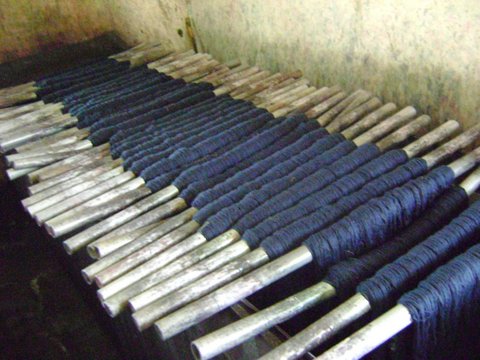
Both the terms are used for traditional Indian Handloom Fabrics.
Muslin
As per BIS, muslin is a generic term for a light weight open cloth of plain or plain gauze weave. Normally muslins do not exceed 68 g/sq.m. In some cases grey fabric is used for example butter muslin and cheese cloth, whereas for others (dress material) bleached and dyed muslin is used.
Muslin can be made in the following counts(Warp x Weft - English)/reed x pick( EPI x PPI)/Wt is gm/sq m
60s x 60s / 66 x 58/ 50
64 x 80/71 x55/40
80 x 80 /76 x 73/45
100 x80 /96 x 88/ 48
120 x 100 /109 x 76/40
Normally in count, reed x pick and weight a tolerance of +-5% is observed. A dimensional change of 4% and a scouring loss of 2.5% is generally the agreed norm.
The fabric should be free of the following flaws:
-More than two adjacent ends running parallel, broken or missing and extending beyond 20 cm;
- Weft crack or more than two missing picks across the width of the material;
- Prominently noticeable weft bar due to the difference in raw material, count, twist, lustre, etc;
- Noticeable selvedge defects;
- Noticeable warp or weft float in the body;
- Noticeable oil or other stains;
-Noticeable hole; cut or tear up to 3 mm in size;
-Smash rupturing the texture of the fabric;
- Undressed snarls noticeable throughout the piece;
- Conspicuous gout due to foreign matter usually lint or waste woven into cloth;
- Conspicuous broken pattern; and
- Any other flaw which would mar the appearance or affect the serviceability or durability of the cloth.
Malmal
Malmal is generally applied to fine cotton fabric slightly heavier than muslin.
Malmal can be made in the following counts(Warp x Weft - English)/reed x pick( EPI x PPI)/Wt is gm/sq m
100x100/ 81 x 81/39
100 x 100/101 x 101/48
80 x 80/68 x 68/42
80 x 80/81 x 78/49
60 x80/68 x 68/50
60 x80/73 x 83/56
60 x60/71 x60/54
60 x60/81x71/62
Tolerance is generally 5% in both directions.
Dimensional change is 5% from loomstate and 4% from processed. Scouring loss is 6% in loomstate and 5% in processed.
Watch this classic song from Lata Mangeshkar related to Malmal
And if you are a fan of Honey Singh, here is his rap in this Song "Kurti Malmal di.."
Muslin
As per BIS, muslin is a generic term for a light weight open cloth of plain or plain gauze weave. Normally muslins do not exceed 68 g/sq.m. In some cases grey fabric is used for example butter muslin and cheese cloth, whereas for others (dress material) bleached and dyed muslin is used.
Muslin can be made in the following counts(Warp x Weft - English)/reed x pick( EPI x PPI)/Wt is gm/sq m
60s x 60s / 66 x 58/ 50
64 x 80/71 x55/40
80 x 80 /76 x 73/45
100 x80 /96 x 88/ 48
120 x 100 /109 x 76/40
Normally in count, reed x pick and weight a tolerance of +-5% is observed. A dimensional change of 4% and a scouring loss of 2.5% is generally the agreed norm.
The fabric should be free of the following flaws:
-More than two adjacent ends running parallel, broken or missing and extending beyond 20 cm;
- Weft crack or more than two missing picks across the width of the material;
- Prominently noticeable weft bar due to the difference in raw material, count, twist, lustre, etc;
- Noticeable selvedge defects;
- Noticeable warp or weft float in the body;
- Noticeable oil or other stains;
-Noticeable hole; cut or tear up to 3 mm in size;
-Smash rupturing the texture of the fabric;
- Undressed snarls noticeable throughout the piece;
- Conspicuous gout due to foreign matter usually lint or waste woven into cloth;
- Conspicuous broken pattern; and
- Any other flaw which would mar the appearance or affect the serviceability or durability of the cloth.
Malmal
Malmal is generally applied to fine cotton fabric slightly heavier than muslin.
Malmal can be made in the following counts(Warp x Weft - English)/reed x pick( EPI x PPI)/Wt is gm/sq m
100x100/ 81 x 81/39
100 x 100/101 x 101/48
80 x 80/68 x 68/42
80 x 80/81 x 78/49
60 x80/68 x 68/50
60 x80/73 x 83/56
60 x60/71 x60/54
60 x60/81x71/62
Tolerance is generally 5% in both directions.
Dimensional change is 5% from loomstate and 4% from processed. Scouring loss is 6% in loomstate and 5% in processed.
Watch this classic song from Lata Mangeshkar related to Malmal
And if you are a fan of Honey Singh, here is his rap in this Song "Kurti Malmal di.."