Showing posts with label dyeing. Show all posts

Saturday, 30 March 2019

Is Turkey Red Same as Alizarin


The answer is yes, the color obtained from Alizarin after mordanting with Aluminium metal salts is also called Turkey Red. This is the red color popularly used in Dabu, Bagru, Tarapur, Kalamkari and Ajrak handblock prining of India. Alizarin is a mordant dye. Mordant is an additive which improves the ability of a dye to bond to the fabric. 

Mordant dyes are used in combination with salts of metal ions, typically aluminum, chromium, iron, and tin. The metal ions adhere to the fabric and serve as points of attachment for the dye molecules.So Aluminium present in Alum is used to generate that famous red color of alizarin. Other metal salts can be used as mordants for alizarin with some interesting color changes results. For example iron sulfate as the mordant imparts a rich brown color to the dyed fabric.

Alizarin, also spelled Alizarine, a red dye originally obtained from the root of the common madder plant, Rubia tinctorum, in which it occurs combined with the sugars xylose and glucose. The cultivation of madder and the use of its ground root for dyeing by the complicated Turkey red process were known in ancient India, Persia, and Egypt; the use spread to Asia Minor about the 10th century and was introduced into Europe in the 13th.

Laboratory methods of preparing alizarin from anthraquinone were discovered in 1868, and, upon commercial introduction of the synthetic dye in 1871, the natural product disappeared from the market for textile dyes.

There is a difference in Turkey Red and Turkey Red Oil. Turkey red oil, also called sulphonated (or sulfated) castor oil, is made by adding sulfuric acid to vegetable oils, most notably castor oil.It was the first synthetic detergent after ordinary soap. It is used in formulating lubricants, softeners, and dyeing assistants.

A trivia- Alizarin is something of a fungicide and pediculoside (that is why it found in the soldiers uniforms).

Buy my books at Amazon.com

Sources:

https://www.academia.edu/24482692/Natural_Dyeing_Fabric_dyeing_with_Madder

https://en.wikipedia.org/wiki/Alizarin


Thursday, 25 October 2018

What is Space Dyeing and What are Space Dyed Fabrics


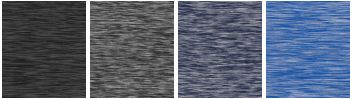
Space dyeing is a yarn dyeing technique in which a multicolor or blurred dye look is created. It creates a textured pattern and provides more color in the fabric.


Space dyeing can be done in any type of fiber- natural or synthetic. It is normally done on polyester, cotton, rayon, nylon and wool. 

In this method, the yarn is dyed at intervals along its length. There are two methods to produce. In the knit-de-knit method, the yarn is knitted first. Then the knitted cloth is dyed and then it is de-knitted. As dye cannot penetrate the areas where yarn cross, it creates alternate dyed and undyed spaces.

 In the other method, which is also a high speed method, the yarn must be wound on some dye package. It can be Dye Spring, plastic tube or steel tube. The chemicals are color mixtures are mixed and put in the individual color tanks of a space dyeing machine. Dyes are then injected using needles which are inserted into the package. 

https://www.cottonworks.com/wp-content/uploads/2018/01/Dyeing_Booklet.pdf

After dyeing the packages are placed in yarn conditioning machine for fixation and subsequently washed.

The below image gives the process steps

http://www.jogson.com/company_brochure.pdf

Multiple pattens can be produced as given below

http://www.jogson.com/company_brochure.pdf

Sources

1 2 3 4 5


Buy my books at Amazon.com

Wednesday, 8 October 2014

New Book on Dyeing- Why Turquoise Bleeds


Why Turquoise Bleeds?
Essential Dyeing Knowledge for the Merchandisers
A Book By

Priyank Goyal


This book takes the reader through intricacies of understanding deing from a very beginner level. It covers all dye classes and their practical implications for the merchandiser.

Order Here


Product details

  • Format: Kindle Edition
  • File Size: 779 KB
  • Print Length: 75 pages
  • Simultaneous Device Usage: Unlimited
  • Publisher: Priyank Goyal; 1 edition (6 October 2014)
  • Sold by: Amazon Digital Services, Inc.
  • Language: English
  • ASIN: B00O8ZSVI6

There is a dearth of books in the market that can help merchandisers in understanding the basics of dyeing especially those who are not from the textile background. This book is an attempt towards fulfilling that gap. The author has tried as far as possible to keep the book away from the technical and chemical jargon and tried to present the material in the way that a layman who is introduced to this trade would understand. 
This book can be taken as a complement to his other book for the merchandisers “Who is Mangalgiri? Essential Fabric Knowledge for the Merchandisers”, also published by Amazon. Apart from merchandisers, this book is suitable for students, teachers, traders, buyers, sellers and managers. 
The first chapter “An introduction to Dyes and Classes of Dyes” clarifies the concepts related to dyeing. It introduces gently the readers to various dye classes such as direct, reactive, vat and others and their distinguishing properties. 
The second chapter “A Few Details about dye classes” takes the reader through the details of the various dye classes such as the fibers they can be applied on, the method of application and the properties related to of those dye classes. It introduces in details the various terms related to the colorfastness of dyes. 
The third chapter “Dyeing from Fiber to Garment Stage” takes the reader through the details of dyeing at various stages of textile chain, their advantages and the process of application. 
The fourth chapter “Coloring by Pigments” introduces the concept of pigments, how they are different from dyes and their various methods of application. 
The fifth chapter “Some practical notes for the merchandisers” takes the reader through the practical and commercial aspects of dyes, how to identify them in practical settings and other related issues. 
The sixth chapter “Natural Dyes” introduces the concept of natural dyes, how these are different from the synthetic dyes. Their advantages and limitations and some commonly used natural dyes. 
The seventh chapter “Dyeing with Indigo” takes the reader into details regarding indigo dyeing, the method and process of application and especially its use by the handloom weavers. 

Visit our webstore at velvetkart.com

Wednesday, 2 January 2013

Dyeing of Cotton with Azo Free Dyes ( In Hindi)


एजो फ्री रंगों से सूत की रंगाई की विधि 

The following brochure from Weavers Service Center depicts the process:


Thanks for your attention. Did you find the information you were looking for ? Please leave a comment. Do you need to know more ? Please suggest a topic in the comments.

Wednesday, 26 December 2012

Dyeing of Silk with Acid Dyes


This is as per a brochure from CSTRI ( Central Silk Board)

Receipe

M:L- 1:30
Dye- X% on the weight of the material
Glauber Salt- 10% on the weight of the material.
Acetic Acid- 4-6% ( 40% strength)
Temperature: 85-90 deg C, pH-4-6, Time- 15 minutes

Procedure

- Preparation of dye solution: Dissolve required dye powder in boiling water in a separate beaker/vessel.
- Set the dye bath with required quantity of water.
- Add Glauber Salt
- Add dye solution.
- Enter the presoaked material at 40 deg C. Work for 10 minutes.
- Take out the material.
- Add acetic acid and stir well.
- Enter the material.
- Gradually raise the temperature to 85-90 deg C.
- Work for 35-40 minutes
- Take out the material followed by cold wash.
- Removal of excess water by using hydro extractor.
- Dyeing under shade.

Thanks for your attention. Did you find the information you were looking for ? Please leave a comment. Do you need to know more ? Please suggest a topic in the comments.

Sunday, 3 June 2012

Manufacturing of Powerloom 40s x 40s 72 x 68 Fabric


This fabric is woven on the border areas of Andhra Pradesh and Tamil Nadu states of India and has a widepopularity as a dress material for ladies ( Kurtis and Salwars). It has the potential to be printed or embroidered.

The count for this fabric is 40s  both warp and weft and constructions is 72 and 68. It is available in both 44 inches and 56 inches.

The following are the broad steps in making the fabric

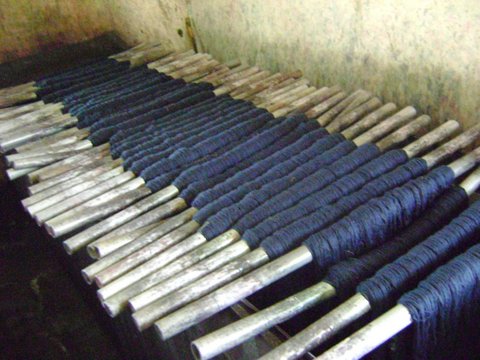
1. Yarn is taken in hank form and is kept in water tanks for two days for them to wet properly. Then the yarn is scoured in hank form itself.

Label on a Hank Yarn


2. Yarn dyeing is done using either reactive or vat dyes. Yarn dyeing is done manually.
Color Kitchen

Dyeing Bath for Hank Yarn - Reactive Dyes
  

3. Yarn is then subjected to sizing using Maida and Gum as components. The yarn is subjected to alternate dyeing and sizing three times.
Yarn Being Dried after Sizing

4. Yarn is then prepared for warping using an ingenious creel and then wound onto a weavers beam using a conventional sectional warping machines. 


5. Pirns are prepared using an indigenous contraption.


6. Yarn is then worked on powerloom having warp stop and weft stop motion.


6. Primitive dobbies are used for woven and zari borders.
 
7. The yarn is then subjected to finishing using water, sometimes in a padding mangle using softner and desizing agent.


Thanks for your attention. Did you find the information you were looking for ? Please leave a comment. Do you need to know more ? Please suggest a topic in the comments. You can also join the Forum for your specific queries.

Monday, 16 January 2012

Factors influencing the cost of Processing


A very good treatment of the topic is given in this article


Thanks for your attention. Did you find the information you were looking for ? Please leave a comment. Do you need to know more ? Please suggest a topic in the comments. You can also join the Forum for your specific queries.

Friday, 24 July 2009

Weekly Website Review- Dyeman


"There are no bad dyes - only bad dyers" is the punch-line of Batik Oetoro , who are suppliers of textile materials, service and know-how to the artists.

The website is well structured and brimming with information.

Click on dyes and you get to see a colorful assortment of dyes. Move down and you will find the dyeing instructions for that class of dyes. There is also a dye receipe for hand painting of the fabrics. Also dyeing instructions for all possible applications are given. For example the following techniques are explained for acid dyes:


1.Dip dyeing
2.Hand painting - chemical water fixation
3.Hand painting - Drimafix fixation
4.Tie dyeing
5.4 Minutes rapid fixation method
6.Polychromatic printing


Under "Fabric Decorating", some marvellous techniques using dyes such as Devore and Marbelling are given.

Though the site was last updated in 2008, you can get an idea about the cost comparison of the different classes of dyes.

There is also an automatic calculator which convert virtually every weight and volume measurement into teaspoons.
I really love their most comprehensive instructions on natural dyes .
They also have instructions for dyeing silk/viscose blend.
For the curious, they have a list of common names used for chemicals .
For the beginner a summary of dyes is given.
Of course, they have a glossary of terms .

Sunday, 12 July 2009

Rapid Dyes


The Rapid dyes are stabilized azoic dyestuffs.

 They are applied to the fibers in one operation.

 Bright full colors are obtained with very good fastness properties.

 These are used for printing backgrounds so that the foreground becomes prominent. Hence these are suitable where large areas of ground need to be colored.

 Rapid dyes are mixed with water and boiled with caustic soda and a gum paste. A receipe for rapid dyes is given here.

The shades in rapid dyes are unpredictable since the color that is mixed is different from the final color.

True colors emerge only after the fabric has been printed and washed in a mild sulphuric acid solution.

Also these dyes should be used on the same day.

Some colors such as pure blacks are extremely sensitive to weather. Similarly red colors in rapid is vibrant in summers and mediocre in winter

Tuesday, 7 July 2009

How to Dye Using Indian Natural Dyes


To Dye the Fabric with natural dyes, we proceed as follows:

Tanning

1. Take 20% Harda powder on the weight of material.

2. Make into a smooth paste , add about 10 liters of water.

3. Soak the fabric in this bath for 10-15 minutes.

4. Work it well and dry.

5. After drying remove the extra unfixed harda powder by brushing.

Mordanting

1. Take about 200 gms of alum or 50 gms of Potassium Dichromate or 200 grams of copper sulphate accoding to the color desired.

2. Add 20 liters of water

3. Mix well

4. Enter the Harda Treated material into the dyebath and work well

5. Keep of 10-15 minutes

6. Squeeze and wash once in plain water to remove excess of mineral salt.

Developing

Please see the "Developing of Color" Section of the article "How to Print Using Indian Natural Dyes" .  

Saturday, 4 July 2009

Defects in Sulphur Dyeing


Defects in Sulphur Dyeing

1. Tendering

Tendering in the fabric takes place because sulphur is converted into sulphuric acid after oxidation which is harmful for the cellulosic fibers. This defect can occur on account of not proper washing of the fabric after dyeing which results in retaining of sulphuric acid on the cloth.

2. Uneven Dyeing and Oxidation Marks

This may occur due to:

a. Lower strength of sodium sulphide

b. Using improper amount of sodium sulphide.

c. Sodium sulphide does not wash off fully after washing.

d. Variation in temperature.

e. If colors are not dissolved properly, or colors are not of good quality

f. If the chemical used for oxidation is not of good quality

g. Fabrics are not worked upon properly at the time of dyeing.


3. Bronziness

This defect normally occurs in heavy shades. Given below are the reasons:

1. More time gap between dyeing and washing

2. Using more of less strength sodium sulphide

3. Using more salt.

4. Oxidiser doesn't get washed off properly during washing

5. Sodium sulphide doesn't get washed off properly during washing.

6. More presence of iron and copper ions in water.


4. Poor colorfastness to rubbing

It depends upon:

a. type of color
b. Lower strength of sodium sulphide
c. Poor absorbency of the fabric
d. Fabric is not washed properly
e. The quality of soap used for washing is not proper
f. Dyeing bath made of iron instead of steel
g. Frequent addition of colors and chemicals
h. Using Cationic finishing agent in finishing also lowers the colorfastness to rubbing
i. Improper color solution, Improper material to liquor ratio etc.

5. Roughness in Fabric

1. Using more amount of sodium sulphide that doesn't get washed off during washing.
2. Heavier shade
3. Improper washing
4. Not using anionic softening agent in finishing
5. Not using wetting agent.

Friday, 3 July 2009

How to Print Using Indian Natural Dyes


General Procedure

1. Tanning of Fabric with Myrabolan Powder

If myrobalan powder is taken

a. Take 200 gms of Myrobalan powder for 1 kg of fabric

b. Make a smooth paste with water, without any lumps

c. Add water till it becomes 5 liters.

d. Mix well

e. Soak the fabric in this

f. Work the fabric in this solution at room temperature for 15 to 20 minutes.

g. Squeeze the material and dry it in shade.

h. When dried, remove the unfixed material by striking it against wall.


2. Preparation of Thickening Agent

Using Tamarind Seed Powder

a. Add 100 gms of Tamarind seed powder in 1 liter of boiling wter.Sprinkle the powder in the boiling water stirring to avoid lumps.

b. Cook and mix till a fine paste is ready, cool it and filter the contents.

c. Remember that this paste is stable only for 2 to 3 days.

Or

Take Bhagvathi gum, add 30 to 50 gms of powder for 1 liter of water. It is also soluble in cold water.

This paste has better stability

Avoid Gum Arabic.

3. Mordanting the Solution with Mineral Salts

Take the mineral salts according to the following formula:

x parts of mineral salts
15 to 20% boiling water
70% thickening agent
to make it 100%.

The following are the general guidelines for getting the dark shades.

Alum= 10%, available by the name of Fitkari
Potassium Dichromate= 5%, available as Lal Kashish
Copper Sulphate= 10%, available by the name of mor Thuth
Ferrous Sulphate= 1 to 5%, available by the name of Hira Kashish
Iron Solution = 50%

Iron solution is made by the following procedure:

a. Take 2 kg of Iron Pieces, 1 to 1.5 kg of Jaggery and add 20 liters of water.

b. Keep in a plastic container for 3-4 weeks

Tin Chloride= 0.5 to 1.0 %

The Procedure for making the paste is:

a. Ground the mineral salt into powder form.
b. Add water and boil.
c. When completely dissolved, add the thickening agent.

The paste is ready for the printing process

4. Printing

Now Print the fabric using blocks. Dry and wash as follows:

5. Washing

 When washing in river keep the printed portion face down so that it touches water. Wash for about 5 to 10 minutes, printed portion is not touched. Care should be taken that printed portion should not touch the unprinted portion.

After washing, dry in flat on the ground. Dont hang. Now the fabric is ready for developing.


6. Developing of Color

Fabric is developed using traditional material. For yellow ranges Pomegranate rind ( Anar ka Chilka) or Forest Yellow (Amba Haldi) 50% or Moduga flowers ( Desuda phool) are taken. For Pinks to reds maroons Alizarin(0.5% with 10-20% Dhavdi flowers added to dye bath), Mnajistha(25-50%) is taken, for grey ranges: Rathanjoth(30% to 50%), Ferrous Sulphate is taken, for brown range: catechu ( Katha) and its componets are taken.

 Powder the dye and mix and boil with water for 3-4 boils. Filter it. Make a dye bath with material to Liquor ratio of 1:20 at 50 deg C. Add the solution in it. Enter the fabric ( already mordanted ) in it. Work well and raise the temperature to boil. Dye for 30-40 minutes. Wash and soap. Dry in shade.

Monday, 22 June 2009

How to Improve Colorfastness in Vat Dyeing


Colorfastness Problems in Vat Dyeing- Reasons and Remedies

Causes of Poor Colorfastness in Vat Dyeing

Frequent addition of colors in the dye bath to match the shade. It disturbs the equlibrium between colors and chemicals.

- Improper oxidation

- Improper washing

- Some peculiar colors such as blue and brown also leads to this defect.

- Hardness in the water used

- Mixing of incompatible colors

- Usage of large quantities of reducing agent and alkali

- Improper temperature

- Improper wringing of the cloth

- Faults in the machine

- Not using essential chemicals such as dispersing agent or leveling agents.

- Dyeing in a finished cloth ( Resin or Silicon Finish)

- Improper preparation of the cloth or thread for dyeing ( Like not removing impurities or size)

How to improve colorfastness in Vat Dyeing

1. Dont frequently add colors during dyeing

2. Ensure proper reduction clearance

3. Ensure proper oxidation

4. Choose right colors and chemicals

5. Control Temperarue

6. Use soft water

7. Add Dispersing or levelling agent as per need

8. Dont redye finished cloths

9. Ensure proper washing after dyeing.

10. Treat the material with small amount of Ammonia and Sodium Hydrosulphite

11. Treat the cloth with large amount of reducing agent and alkali. This method can be resorted to if there is some bleeding in the colors.

Saturday, 20 June 2009

Listing Defect in Vat Dyeing


Listing Defect in Vat Dyeing and the Precautions to Prevent the Defect

Listing is the variation in color of centre of the fabric with the selvedge. Some of the reasons for this defect are:

1. Improper batching.
2. Non Uniformity in the selvedge
3. Redyeing of the fabric
4. Foam on the two sides of the jigger.
5. Slippage of the fabric from the roller during dyeing.
6. Shortcomings in the machine such as malfunctioning of guide roll, expander roller or improper squeezing.
7. Improper filteration of the colors, improper circlation of the liquor during dyeing. Difference in temperature of liquor in the centre and at the ends.
8. Mixing of colors which are not properly compatible.
9. Improper singeing

The remedies are:

1. There should not be any mechanical fault in the machine.
2. Take proper care during dyeing, like filter the color solution before using, ensure that all the controlling instrument ( temperature, time) work properly. Circulate the liquor continuously during dyeing.
3. If some shade is not coming out proper, dye with a slighly heavy shade without taking out the earlier color.
4. Join the fabrics of the same width while making a lot.


Wednesday, 17 June 2009

Natural Dyes and their Application Classes


Natural Dyes and their Application Classes
S. No.Common NameDye Class
1IndigoVat
2MadderMordant/Disperse
3manjeetAcid/ Mordant/Disperse
4SappanwoodMordant /Disperse
5Lac dyeAcid/ Mordant
6BerberineBasic
7TesuMordant/ Disperse
8KamalaMordant/ Disperse
9DoluMordant/Disperse
10Gall NutsAcid/ Mordant
11CutchAcid/ Mordant/ Disperse
An excellent paper on the status of natural dyes in India can be downloaded from here

Here is a great blog talking about mordanting on wool.

Thursday, 11 June 2009

Trade Names of Natural Dyes


DYE SOURCEBOTANICAL NAME/ SOURCETRADE NAME
PomegranatePunica granatiumPacific
MyrobalanTerminalia chebulaKongo
CutchAcacia catechuThar
KamalaMallotus phillipinensisBasant
Nut Galls Quercus infectoriaAmber-M
MadderRubia cardifoliaIndus
Himalayan RhubarbRheum emodi Desert
IndigoIndigofera tinctoriaNile
Annato Bixa orellanaAmazon
LacCoccus laccaeRhine-M

You can find a tutorial on How to Use Natural Dyes here.  Receipes for natural dyes can be found here.

Common Causes of Dyeing Defects


Common Causes of Dyeing Defects:

It is important that the general precautions should be followed while dyeing a textile material. It is always helpful to keep a record of all the conditions (including temperature, time, conc of color, chemicals, material to liquor ratio) in order to get an even shade in each batch. In general the following are the common causes of dyeing defects across all the categories of dyes:

1. The material is not well prepared for dyeing and printing

a. Material having dead fibres or other defective fibres
b. Left over of Chemicals after bleaching etc.
c. Material not properly desized
d. Material not properly mercerised.
e. Absorbancy of the fabric not proper
f. Sticking of insoluble material on the fibres
g. Impurities are not removed properly
h. Uneven heat treatment.

2.Water Quality not Proper

a. More Hardness of water
b. Water has metal ions such as iron.
c. pH of water not proper
d. Water having more chlorine

3. Due to Shortcomings in making Dyeing Solution

a. Improper weight ratio of colors, material and chemicals.
b. Improper material to water ratio
3. Improper filtering of concentrated colors.

4. Due to Shortcomings in the dye machinery

a. Coming out of Dye liquor during dyeing
b. Defective instruments controlling temperature, pressure speed etc.


Wednesday, 3 June 2009

FAQ in textile dyeing


Here is an amazing site to answer the following ( and many more) frequently asked questions on Dyeing:

Which dyes are more lightfast?

How can I fix non-reactive dyes

Is there anything I can do to "set" the dye on purchased fabric?

How can I dye spandex (or Lycra or elastane)?

How can I dye nylon?

How can I dye rayon?

How can I dye satin or charmeuse?

How can I dye polyester?

What are mordants? What's the difference between mordants and other dye chemicals?

What is soda ash? What's it used for?

What temperature should the soda ash be?

What is the effect of pH? What is the optimal pH?

What is urea for? Is it necessary?

What is the effect of temperature?

Should I use distilled or spring water instead of tap water?

Do I need to use salt?

How are thickeners such as alginate used with dye?

How do you use Silk Salt or other large salt crystals to make bursts of color?

Help! I ruined clothing by spattering bleach. How can I fix it?

How do you "bleach" a screen print on a t-shirt?

Can you tie dye something that is already dark?

How can I neutralize the damaging effects of chlorine bleach?

What chemicals can be used to remove dye?

Which Procion MX dyes discharge the best? Which are good at resisting chlorine bleach?

Which Procion MX dyes are pure, and which are mixtures?

Which MX dyes at one supplier are the same as those at another?

How can I mix Procion MX dyes to get specific colors?

What is in Procion type dye powder?

What other brand names are Procion MX type dyes sold under?

What do the letters and numbers in the code name for a Procion MX type dye mean?

Which Procion MX dyes discharge the best? Which are good at resisting chlorine bleach?

Which Procion H dyes are pure unmixed colors, and which mixtures? How do they compare from one retailer to another?

Which Wash Fast Acid dyes are pure, rather than mixtures?

What are Kiton Levelling Acid Dyes?

My colors just washed out! What happened?

My colors are not very bright. What did I do wrong?

Why are there specks of color all over my fabric?

Why did the thread stay white when I dyed clothing?

How do you tie-dye a star or mandela pattern?

How do you tie-dye a spiral?

How do you tie-dye letters of the alphabet?

How can I tie-dye a peace sign?

How can I dye clothing or fabric in the washing machine?

Can I paint on clothing with oil paints?

Can I screenprint with a dye resist?

How do you tie-dye socks?

Is it safe to eat or breathe fiber reactive dyes?

Which dyes are the safest? Which are the most dangerous?

Aren't natural dyes always safer than synthetic dyes?

Is all-purpose dye safer than fiber reactive dye?

Friday, 26 September 2008

Dyeing Hints


This site talks about very practical dyeing hints. Some of which are "animals are acidic and botanicals are basic", how to measure mordants and dyestuff, besides dyeing terminology.

Tuesday, 12 August 2008

Dyeing of silk with lac dye


Dyeing of Silk with Lac Dye

To extract dye, stick lac is crushed into pieces but not into powder form because at the time of boiling, the sticky resin substance melts and sticks to silk fiber thus damaging the material. These small pieces of stick lac are wetted with water overnight and then churned by which dyes with water come out easily in the form of solution as the dyes are water soluble. It is filtered well and care should be taken that even a small piece of resin is not present in the solution. Depending upon conditions, dyes are extracted from 50% to 98%.

Silk is treated with 2-5% solution( on the weight of the material) of mordant (generally alum) at the boiling temperature for 45-60 minutes. Some times the dyer add turmeric powder (curcuma longa) to get the orange tone. Silk is squeezed only, not washed by fresh water, at this stage. If potash alum is used as mordant then purple color is produced. If copper oxide with ammonia is used then bluish violet is obtained. To get dark red, lead acetate is used, to get reddish yellow, pot. dichromate is used. Copper sulphate produces violet. Barium Hydroxide gives dark red, Tinchloride with Oxalic acid gives pink. Ferrous Sulphate gives a color ranging from grey to black. K2SO4 with Cream of tartar gives violet color.

Dye bath is prepared with the extracted dye solution and rest with water with material to liquor ratio of 1:30. Dyeing is carried out for one hour at boiling temperature. A little solution of myrobalan (Terminalia Chebula retz) is added during the process to achieve greater fastness.

Acidic pH is maintained throughout the process of dyeing and if required the pH is maintained by use of acetic acid. Now dyed material is taken out from the dye bath and washed with fresh water.

About 4-5 kg of stick lack is required for dyeing 1 kg of silk.


Total Pageviews