Buy my books at Amazon.com
Textile Notes related to fiber, yarn, fabric knowledge, spinning, weaving, processing, projects, knitting, Indian Traditional Textiles and denim manufacturing
Friday, 6 May 2022
Difference between Kanjivaram and Dharmavaram sarees
Buy my books at Amazon.com
Polishing in Kanjivaram Sarees
Tuesday, 12 April 2022
Costing of a Typical Handloom Kanjivaram Saree
All About Zari in Kanjivaram Sarees
These are the following qualities of zari used in Kanjivaram and Varanasi Sarees. First lets understand some terms related to zari:
This is also used in the low cost Kanjivaram sarees. Generally it is 30 D zari. Here the core is polyester, with 0.2%-0.3% ( 2 to 3 grams/kg of copper) silver wrapped on copper . Normally price is around 720 Rs. per mark.
Buy my books at Amazon.com
Sunday, 10 October 2021
How to Test for Pure Zari in Kanjivaram and other Sarees
A few testing laboratories in Kanchipuram provide this service. This is what this portal has to say about the testing method:
In order to build the confidence and credibility among the customers and in the industry about the quality of zari in silk fabrics, testing is very important and much required. Hitherto, for testing metal contents in zari, destructive method of testing has been carried out. Now, the testing of zari samples and zari made fabric are carried out by Non-destructive testing (XRF Analyser), which is a unique one. The technical know-how of the project was jointly developed by Technology Information, Forecasting and Assessment Councils (TIFAC) and Tamil Nadu Zari with the guidance of the Indira Gandhi Centre for Atomic Research (IGCAR, Kalpakkam).
The Zari is sold in terms of MARC. Weight of one marc is 242 grams. The composition of the marc is indicated below: -
SILVER 55 to 57%
SILK 22 to 24%
GOLD 0.59 to 0.60%
COPPER 20 to 22%
RAW MATERIALS
The required raw materials for the production of the gold zari are:-
Ø Silver wire - 76 to 77%
Ø Silk - 13 X 15 denier
Ø Gold - 24 carat.
What is Single, 1.5, double warp in Kanjivaram Sarees
1. Kanjivaram Sarees Use 20-22 denier 3 ply filaments.
| Handloom | Powerloom | |
| Single Warp | 46-47.5 | 44-46 |
| 1.5 Warps | 46-47.5 | 44.5-46 |
| 2 Warps | 46.47.5 | 45-46 |
Buy my books at Amazon.com
Sunday, 21 March 2021
What are the Various Wild Silk Yarns
- Reeled Tussar/ Tussar Raw Silk: It is reeled from Tussar cocoons using different appliance. Reeled Tussar is finer in nature.
- TussarGicha: Yarn drawn by hand out of Tussar cocoons without any twist.
- Tussar Katia: Yarn spun out of Tussar waste after opening and cleaning.
- Tussar Jhuri: Yarn spun out of uncleaned Tussar waste without subjecting it to opening and cleaning process.
- Balkal yarn: Yarn spun out of Tussar cocoon peduncles, after boiling in alkaline solution and opened up.
- Tussar Spun Silk: Yarn spun in the mill out of Tussar silk waste.
- Muga Raw Silk: Yarn reeled from Muga cocoons.
- Muga Gicha: Yarn drawn by hand out of muga cocoons without any twist.
- Hand Spun Endi/ Eri Silk: Yarn spun by hand appliances from Eri cocoons.
- Mill Spun Eri Yarn: Yarn spun in the mill from Eri cocoons.
How Cocoons are measured in Wild Silk ( Vanya Silk)
Tussar Cocoons:
The unit of measurement of tussar cocoons is Kahan. Number of Cocoons per Kahan vary in different states. In MP one Kahan has 1000 cocoons while in Maharashtra it has 4000 Cocoons.
About 1200 cocoons are required to produce one kg of yarn.
ERI
The Eri cocoons are measured on the basis of weight ( kg)
MUGA
The Muga cocoons are transacted in thousand numbers. About 5000 cocoons are required to produce 1 kg of Muga Raw Silk.
What do you Mean by Vanya Silk
Non mulberry silks such as Tussar, Muga and Eri are called Vanya silks.
Production Trends ( 2010-11)
Vanya Silk contributed to about 20% of the total raw silk in India.
Eri, Tussar and Muga contributed to about 64%, 33% and 3% of the total Vanya silk
It contributes to about 10% of the total exports of silk goods
Tussar Silk
Silk Worm : Antheraea mylitta and Antheraea proylei
Feed on: Asan, Arjun and Oak
India is the second largest producer or Tussar Silk
History: Ram's nuptial gift to Sita included Tussar Silk
Muga Silk
Silk Worm : Antheraea assamensis
Feed on: Som and Sualu
Use of Muga Yarn instead of Zari is finding its support in Indian Weavers
Thursday, 14 May 2020
Difference among Hand-knotted, Hand-tufted, Kilim and Durries
Source
Buy my books at Amazon.com
Sunday, 26 May 2019
Three Million Page Views !! Thank you Readers !
Sunday, 12 May 2019
What causes Pilling in the Fabrics
Pilling is always known in wool specially in garments with soft twisted yarns like Angora. However, with the emergence of synthetic fibers the tendency is aggravated.
What happens is that because the strength of the fibers which "anchor" the pills is low in the natural fibres, pills get formed and removed. But in case of synthetic fibers, which have more strength. the pills remain on the garment and accumulate and become worse.
Why pills get formed. It is due to migration of fibers from the yarn on to the surface of the fabric. So any treatment that reduces this migration tendency will reduce the pilling tendency. Thus increasing the twist in the yarn reduces the pilling tendency as it binds the fibers onto yarn.
The following are factors affecting Pilling
Fiber Factors
1. Fiber Nature: As explained natural fibers are less susceptible to pilling than synthetic
2. Fiber Fineness: Finer fibers are more susceptible to pilling as there is more propensity to bending. For example Angora is more susceptible to pilling than normal wool
3. Fiber Friction: More crimp in the fiber, less is the crimp as the migration tendency of the fibers is reduced.
4. Fiber Length: Shorter fibers are more susceptible to pilling as the migration of fibers is increased.
5. Fiber Strength: As explained earlier, strong fibers increase pilling tendency as there the pills find it hard to dislodge from the garment surface.
Yarn Factors
1. Yarn Count: Coarser the count, more fibers are there in the cross section which leads to higher pilling tendency.
2. Yarn Twist: As explained earlier, more yarn twist leads to less crimp as it binds the fibers more and reduces its yarn tendency.
3. Yarn Finishing: Unsinged yarns have more tendency to pill.
4. Incompatible Blends: If the blend contains components that are incompatible with respect to fiber length and other parameters, tendency to pill increases.
Fabric Parameters
Closer fabric structures lead to less pilling.
If the fabric is subjected to long processes in finishing and processing there is more friction and hence more pilling is formed.
Use of anti-pilling finishes can reduce the tendency of pilling.
Apart from technological factors, a few of the important factors for pilling are:
1. The person wearing the garment, if that person is particularly hard on garments, pilling tendency is more.
2. There are some susceptible parts of garments such as collars, cuffs, pocket edges which are more susceptible to pill, as there is more rubbing/chafing of the parts.
3. Garments which are frequently washed are more susceptible to pilling.
Testing of Pilling
A very nice introduction to pilling testing is dealt in this NPTEL lecture.
Sources
1 2- Principles of Textile Testing- J. E. Booth
Buy my books at Amazon.com
Saturday, 13 April 2019
What are the three Primary Colors used in Traditional Handblock Printing of Rajasthan
- The application of red dye is called Ghan Rangai. For ghan grangai, the alum mordanted fabric is introduced into a heated water bath along with Alizarin. It produces the red, wherever the fabric is mordanted with Alum.
- The application of Indigo for producing blue color is called Nil Rangai. In this an Indigo dye vat is prepared and fabric is introduced into it and the fabric is dipped into it for 5 to 10 minutes. Then it is taken out and spread into the sun. After this it is again introduced into the bath, this goes on until the required color depth is obtained
- The third primary shade, yellow is obtained using Nasphal Putai. Nasphal dye is a cold solution of anar ka chhilka ( pomegranate rind) and haldi ( turmeric) which is typically smeared ( Potai or putai) onto the cloth surface after all other dye and print process has been completed. As an overdye, nasphal generates a number of other shades: over indigo it creates green, over kasumal it gives orange, and over red dyed areas it results in softer red-ochre shades. This smearing is done quickly and after smearing, the cloth is laid in the sun "until it smells cooked". After that it is rinsed in Alum solution, dried and aged and washed thoroughly.
Difference between Sanganer and Bagru/Pipar/Balotra styles of Handblock Printing
Buy my books at Amazon.com
Saturday, 30 March 2019
Is Turkey Red Same as Alizarin
Sources:
https://www.academia.edu/24482692/Natural_Dyeing_Fabric_dyeing_with_Madder
https://en.wikipedia.org/wiki/Alizarin
Sunday, 17 March 2019
How to find the Number of Ends in a fabric when weight, count and Length of Warp is Given
This calculation is taken from "Textile Calculations" by Ashenhurst
For cotton
Multiply the weight of the yarn in lbs x Yarn count x 840)/yards of warp required
Change 840 to appropriate systems for other fibers.
eg. It is desired to make 3 kg of 40s cotton into a warp 56 meters long, how many ends will it contain:
1 kg = 2.2 lbs
1 m = 1.09 yards
So the number of ends that it will contain is
(3 x 2.2 x 40 x 840)/(56 x 1.09)= 3633 ends.
Buy my books at Amazon.com
Fiber - Specific Gravity
| Fiber | Specific Gravity |
| Acetate Rayon | 1.30-1.33 |
| Acrylic | 1.14-1.18 |
| PVC | 1.38-1.70 |
| Glass Fiber | 2.50 |
| Modacrylic | 1.31-1.37 |
| Nylon | 1.10-1.14 |
| Polyester | 1.22-1.38 |
| Polyolefin | 0.90-0.95 |
| Cupramommum Rayon | 1.52 |
| Viscose Rayon | 1.52 |
| Carbon High Modulus | 1.77 |
| Carbon Ultra High Mod | 1.96 |
| Alpaca | 1.31 |
| Angora Rabbit fur | 1.10 |
| Camel Hair | 1.31 |
| Cashmere | 1.31 |
| Cotton- Solid Fiber | 1.54 |
| Cotton Overall fiber | 1.35 |
| Linen | 1.50 |
| Flax | 1.50 |
| Hemp | 1.50 |
| Jute | 1.50 |
| Mink | 1.26 |
| Mohair | 1.31 |
| Musk Rat | 1.26 |
| Rabbit-Common | 0.92 |
| Ramie | 1.55 |
| Silk Weighted | >1.60 |
| Silk- B. Mori (Raw) | 1.33 |
| Asbestor | 2.1-2.8 |
| Silk- Tussar | 1.32 |
| Wool ( non-modullated) | 1.31 |
Friday, 8 March 2019
Dimensions of Some Animal and Vegetable Textile Fibers
Source: Handbook of Textile Technical Data - TIT&S Bhiwani
Saturday, 2 February 2019
Is Crepe Fabric made up of Polyester ?
The explanation lies in the difference between fabric and fiber of which it is made of. So Crepe fabric can be made of cotton, viscose or polyester depending upon the end use. Here crepe is a form of weave, which can be done on any of the fibers.
Buy my books at Amazon.com
Saturday, 5 January 2019
About Tearing Strength of Fabrics
The factors which contribute to the resistance to the tear is :
a. Strength of the yarn normal to the tear.Suppose you are trying to tear the weft yarns. Then those yarns need to be stronger.
b. Freedom of movement of the yarn in the direction of the tear. As in a. The freedom of movement in the warp yarns should be there, which can be done by reducing the EPI.
There are two types of Tear strength measurement come into play. First is Initial Tear Strength: It is when the load is applied on the fabric to tear it. This load is always higher than the average tear strength. It is because of the fact that up to this load, yarn crimp removal and sliding takes place. But once this point is reached the load is instantly transferred to the successive yarns and the tear strength obtained is known as average tear strength.
These are ways that the tear strength in a fabric can be affected:
1. By reducing the thread count in the direction opposite to the direction of test, the tearing strength can be increased. So if you are tearing warpways-means you are tearing weft yarn- reduce the thread count of warp yarn-means reduce EPI.
2. Use yarns with the high breaking load in the direction of test to increase tearing strength. Means take stronger yarns in weft, as in example in point 1. This is the most important factor.
3. Decrease friction between yarns to increase tearing testing strength. This allows threads to group closer together under the tearing force, so instead of the successive breakage of individual threads, the action becomes more of a strength test on plied yarns. Decreased friction allows this grouping.
4. Related to 3, is the effect of the weave. Thus a twill or 2/2 matt structure allows the threads to group better than a plain weave. So Twill or 2/2 exhibit better resistance to tearing than plain weave.
5. Related to the point 1, high sett fabrics preclude thread movement hence the assistance by thread group is reduced.
6. Special Finishes such as drip dry or crease resistance finishes may reduce tearing strengths.
Source: 1 , Textile Testing by Booth, 3,
Video below gives the tearing testing procedure:
Buy my books at Amazon.com
Thursday, 15 November 2018
Can Wet Rubbing Fastness Greater than Dry Rubbing Fastness
"This is sometimes observed in polyester fabrics. In these cases, the friction coefficient in wet crocking is lower than dry crocking. Thus, in contrast to cotton, the colorfastness to wet crocking for polyester is higher than its colorfastness to dry crocking."
Other Resources:
1
How a Rubbing Fastness Tester Works. Watch this video:
Buy my books at Amazon.com
Saturday, 3 November 2018
Jaipur Printing- Jajam Print
An amazing account of this craft is found here. Anokhi Museum Blog talks a lot about it.
This video is posted by Mr. Brij Ballabh Udaiwal on Facebook:
Reference
Buy my books at Amazon.com
Sunday, 28 October 2018
What are Rapid Fast Dyes
Thursday, 25 October 2018
What is Space Dyeing and What are Space Dyed Fabrics
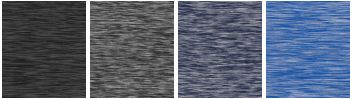
Space dyeing is a yarn dyeing technique in which a multicolor or blurred dye look is created. It creates a textured pattern and provides more color in the fabric.
| https://www.cottonworks.com/wp-content/uploads/2018/01/Dyeing_Booklet.pdf |
After dyeing the packages are placed in yarn conditioning machine for fixation and subsequently washed.
The below image gives the process steps
| http://www.jogson.com/company_brochure.pdf |
Multiple pattens can be produced as given below
| http://www.jogson.com/company_brochure.pdf |
Sources
1 2 3 4 5
Buy my books at Amazon.com
Tuesday, 1 May 2018
What is the difference of Modal from Viscose
What Is the Difference Between Modal and Viscose?
Modal is often described casually as “better viscose” or “a softer form of rayon.” That statement is partly correct, but it is not complete enough for a textile student, merchandiser or quality professional.
Both viscose and modal belong to the family of regenerated cellulose fibres. Both begin with cellulose, generally obtained from wood pulp, and both are manufactured by dissolving cellulose and regenerating it again into fibre form. Therefore, the difference is not that viscose is synthetic and modal is natural. Both are man-made cellulosic fibres.
The real difference lies in wet strength, wet modulus, dimensional stability, and behaviour during use and washing. Modal was developed to overcome some of the important limitations of ordinary viscose, especially its weakness and deformability in wet condition.
Simple answer: Viscose is a regenerated cellulose fibre known for softness, absorbency, drape and affordability. Modal is a modified high-wet-modulus regenerated cellulose fibre designed to retain better strength and shape when wet.
Table of Contents
- What Is Viscose?
- What Is Modal?
- Is Modal a Brand Name or a Generic Fibre Name?
- Why Was Modal Developed?
- The Main Technical Difference: Wet Modulus
- Modal vs Viscose: Comparison Table
- Is Modal Stronger Than Viscose?
- Why Does Modal Feel Soft?
- Can Modal Be Blended With Other Fibres?
- Is Modern Viscose Now Identical to Modal?
- Is Modal More Sustainable Than Viscose?
- Practical Meaning for Merchandisers
- Common Misunderstandings
- Final Summary
- Sources
1. What Is Viscose?
Viscose is one of the most widely used man-made cellulosic fibres. It is popular because it gives a soft feel, good absorbency, attractive drape and comfort similar to natural cellulosic fibres such as cotton.
In fabric form, viscose can look elegant and flow beautifully. That is why it is widely used in dresses, sarees, kurtas, scarves, linings, tops, printed fabrics and many other fashion products.
However, ordinary viscose has one important weakness: it loses a significant part of its strength when wet. When viscose fabric is wet, the fibre becomes more sensitive to stretching, distortion and dimensional change. This is why viscose garments often require careful washing, gentle squeezing and controlled drying.
The key limitation of viscose is not softness. Viscose is soft. The limitation is its wet mechanical behaviour.
2. What Is Modal?
Modal is also a regenerated cellulose fibre, but it should not be treated as ordinary viscose with a fashionable name. Technically, modal is a high-wet-modulus regenerated cellulose fibre.
The phrase “high wet modulus” is very important. In simple terms, modulus refers to the resistance of a fibre to extension under load. A low-modulus fibre stretches more easily, while a higher-modulus fibre resists stretching better.
When we say high wet modulus, we mean that the fibre resists stretching and deformation better when it is wet. This is the central reason modal behaves better during washing, wet processing and repeated use.
In a simplified form, the idea of modulus can be represented as:
\[ \text{Modulus} = \frac{\text{Stress}}{\text{Strain}} \]
In practical textile language, a fibre with higher wet modulus will resist deformation better in wet condition. Modal is valued because it gives the comfort of regenerated cellulose while improving one of the biggest weaknesses of ordinary viscose.
3. Is Modal a Brand Name or a Generic Fibre Name?
Modal is a generic fibre name. It is not a company-specific name in the way that a trademark or brand name is company-specific.
This clarification is important because many consumers know modal through commercial names such as TENCEL™ Modal or LENZING™ Modal. In such cases, TENCEL™ or LENZING™ is the brand or company identifier, while modal is the generic fibre type.
| Generic fibre name | Brand or company example |
|---|---|
| Modal | TENCEL™ Modal, LENZING™ Modal |
| Lyocell | TENCEL™ Lyocell |
| Viscose | LENZING™ ECOVERO™ Viscose |
| Polyester | Trevira, Dacron and other branded forms |
Therefore, it is better to say that Lenzing is a major producer of branded modal fibres, not that modal itself belongs exclusively to Lenzing.
4. Why Was Modal Developed?
Ordinary viscose has many advantages. It is soft, absorbent, comfortable, drapey and dyeable. But it also has important limitations: lower wet strength, easy stretching in wet condition, poorer dimensional stability, and a greater need for care during laundering.
Modal was developed to improve these limitations. It gives the softness and absorbency of regenerated cellulose, but with better wet strength and better shape retention.
This makes modal especially suitable for garments that are worn close to the body and washed frequently, such as innerwear, T-shirts, tops, loungewear, nightwear, babywear and soft knitted fabrics.
5. The Main Technical Difference: Wet Modulus
The most important difference between modal and ordinary viscose is wet modulus. Ordinary viscose has a relatively low initial modulus. It can stretch under comparatively low load, especially in wet condition.
Modal has a higher wet modulus. This means it resists stretching better when wet. The result is better dimensional stability, better laundering behaviour and better resistance to wet deformation.
This does not mean that modal is indestructible. It is still a cellulosic fibre. Its performance also depends on fibre quality, yarn quality, fabric construction, dyeing, finishing and garment care. But compared with ordinary viscose, modal is designed to perform better under wet conditions.
6. Modal vs Viscose: Comparison Table
| Property | Ordinary Viscose | Modal |
|---|---|---|
| Fibre family | Regenerated cellulose | Regenerated cellulose |
| Generic status | Generic fibre name | Generic fibre name |
| Process family | Viscose process | Modified viscose-route process |
| Wet strength | Lower | Higher |
| Wet modulus | Lower | Higher |
| Stretching when wet | More likely | Less likely |
| Shape retention | Comparatively weaker | Better |
| Shrinkage control | Needs more care | Generally better |
| Handle | Soft, smooth and drapey | Soft, smooth and often silkier |
| Dyeability | Good | Good |
| Absorbency | Good | Good to very good |
| Common uses | Dresses, sarees, tops, linings and scarves | Innerwear, T-shirts, loungewear, tops and blends |
| Main advantage | Drape, comfort and affordability | Wet strength, softness and dimensional stability |
| Main limitation | Weakness and deformation in wet condition | Usually costlier than ordinary viscose |
7. Is Modal Stronger Than Viscose?
Modal is generally stronger than ordinary viscose, especially in wet condition. This is the most meaningful performance difference between the two fibres.
In dry condition, the actual strength depends on the fibre specification, yarn count, spinning method, fabric construction and finishing. But when wet, ordinary viscose loses strength more noticeably. Modal was specifically developed to reduce this weakness.
For example, a modal-rich knitted fabric used in innerwear or loungewear can give softness while maintaining better shape over repeated washing. A similar fabric made from ordinary viscose may feel soft but can be more vulnerable to stretching, distortion or poor recovery.
8. Why Does Modal Feel Soft?
Modal fibres are known for their smooth, soft and pleasant touch. This softness comes from the fibre’s cellulosic nature, smooth surface, fine fibre structure and good moisture absorption.
Modal is often compared with cotton and mercerised cotton because it can give a smooth and comfortable handle. It may also show good lustre, softness and drape depending on the fibre, yarn, fabric construction and finishing.
However, fibre name alone does not guarantee luxury. A poorly made modal fabric can still perform badly, and a well-made viscose fabric can still look and feel excellent. Final fabric feel depends on fibre quality, yarn count, twist level, knitting or weaving structure, GSM, dyeing, finishing, blending ratio and garment construction.
9. Can Modal Be Blended With Other Fibres?
Modal can be blended with many textile fibres, including cotton, polyester, wool, silk, elastane and other regenerated cellulose fibres. Common blends include modal-cotton, modal-elastane, modal-polyester, modal-viscose, modal-lyocell, modal-wool and modal-silk.
Blending is done to balance comfort, cost, strength, stretch, appearance, moisture behaviour and garment performance. For example, modal with elastane is popular in innerwear and loungewear because modal gives softness and absorbency, while elastane gives stretch and recovery.
10. Is Modern Viscose Now Identical to Modal?
No. Modern viscose has certainly improved. Producers now make better-quality viscose fibres with improved uniformity, better process control, improved sustainability claims and better wet-processing behaviour.
However, modern viscose does not automatically become modal. Modal has a specific fibre definition based on high wet modulus and high breaking strength. Unless a regenerated cellulose fibre meets the modal specification, it remains viscose or another appropriate generic category.
Correct statement: Modern viscose may be improved, but it is not identical to modal. Modal remains a separate high-wet-modulus regenerated cellulose fibre category.
11. Is Modal More Sustainable Than Viscose?
This question needs careful handling. Modal is often marketed as a more sustainable fibre, especially when it is made from responsibly sourced wood and produced by companies with good chemical recovery systems.
But it is not correct to make a blanket statement that modal is sustainable and viscose is not. Both modal and viscose are man-made cellulosic fibres. Their environmental impact depends on wood or pulp sourcing, forest certification, chemical management, carbon disulfide control, water use, energy use, wastewater treatment, producer transparency and supply-chain traceability.
A better statement is: modal can be a better-performing regenerated cellulose fibre, but its sustainability depends on sourcing, manufacturing practices, chemical recovery and certification.
12. Practical Meaning for Merchandisers
For merchandisers, modal should not be treated only as a fancy word on a label. It has practical implications for quality, garment performance and customer expectation.
When buying modal fabrics or garments, check the blend percentage first. Is the fabric 100% modal, modal-cotton, modal-elastane or only a small percentage of modal? A garment with a small modal percentage should not be described as if its entire behaviour is determined by modal.
Next, check the fabric construction. A modal single jersey, modal rib, modal interlock, modal woven fabric and modal blend fabric will all behave differently. GSM, yarn count, twist, loop length, finishing and garment construction can change performance significantly.
Ask for dimensional stability after washing, pilling performance, colour fastness to washing, rubbing and perspiration, and stretch recovery if elastane is present. If sustainability is claimed, ask for traceability and certification rather than relying only on the fibre name.
13. Common Misunderstandings
Misunderstanding 1: Modal is natural, viscose is synthetic.
This is not correct. Both are regenerated cellulose fibres. They begin from natural cellulose but are chemically processed and manufactured into fibre form.
Misunderstanding 2: Modal is only a brand name.
This is not correct. Modal is a generic fibre name. Some companies sell branded modal fibres, but modal itself is not company-specific.
Misunderstanding 3: Modal and viscose are now the same because modern viscose has improved.
This is not correct. Modern viscose may be better than older viscose, but modal remains a separate high-wet-modulus fibre category.
Misunderstanding 4: Modal never shrinks or pills.
This is not correct. Modal generally has better dimensional stability than ordinary viscose, but shrinkage and pilling depend on yarn, fabric construction, finishing, washing and garment care.
Misunderstanding 5: Modal is always sustainable.
Not necessarily. Sustainability depends on pulp sourcing, chemical recovery, manufacturing process, certification and traceability.
14. Final Summary
Viscose and modal are both regenerated cellulose fibres, but modal is a more advanced high-wet-modulus fibre designed to improve the wet strength and dimensional stability limitations of ordinary viscose.
Viscose is soft, absorbent, drapey and affordable, but it becomes weaker when wet. Modal retains better strength and resists stretching better in wet condition. This makes modal more suitable for garments that require softness along with repeated washing performance, such as innerwear, loungewear, T-shirts, tops and soft knitted apparel.
The best short explanation is: modal is not a completely different fibre family from viscose. It is a high-wet-modulus regenerated cellulose fibre developed to perform better than ordinary viscose, especially when wet.
One-line takeaway: Modal is a stronger, more wet-stable regenerated cellulose fibre, while viscose is the broader conventional regenerated cellulose fibre category.
Related Reading on Fibre Properties, Blends and Textile Testing
Sources
- ISO 2076:2010. Textiles — Man-made fibres — Generic names. International Organization for Standardization.
- BISFA. Terminology of Man-made Fibres. International Bureau for the Standardization of Man-made Fibres, 2017.
- Textile Exchange. Modal. Textile Exchange Glossary.
- Textile Exchange. Viscose. Textile Exchange Glossary.
- Lenzing Group. Fiber Technologies: Explore Lenzing's Production Processes.
General Disclaimer
This article is intended for educational and general textile knowledge purposes only. Fibre behaviour can vary depending on producer, fibre specification, yarn quality, fabric construction, dyeing, finishing, garment processing and washing method. For commercial decisions, laboratory test reports, supplier technical data sheets and recognised national or international standards should be consulted.
What is the difference between Khandua and Sambalpuri Sarees
In cotton Sambalpuri Sarees the count is about 2/120s x 2/140s or 2/120s x 2/120s with a reed and pick of 72 and 76. Whereas in Khandua it is 2/100s x 2/100s, 2/80s x 2/80s or 2/100s x 2/80s with reed and pick of 64 and 72. One warp for Sambalpuri is only 2-4 sarees; whereas for Khandua, it is upto 30 sarees. Also Sambalpuri sarees are Manufactured in the Sambalpuri and Bargarh regions of Orissa, whereas Khandua sarees are manufactured in Nuapatna.
To translate the above for a layman, Khandua sarees are less finer and has less weight ( silk) as compared to the Sambalpuri sarees.
This is not to say that Khandua sarees are in any ways inferior to Sambalpuri, the difference is more of the material used and the fineness desired.
Now if you are a buyer or a shopper, you might be led to believe by a seller that a saree is a Sambalpuri saree and he is giving you at a bargin, but in fact it is a Khandua saree from Nuapatna.
Conversely, you might find a seller is charging you more for Orissa Ikat, when in fact, he is showing you a Sambalpuri Ikat and you are comparing it with Khandua.
Sambalpuri Ikat
Nuapatna Ikat
An Amazing source on Sambalpuri Process is this
Buy my books at Amazon.com
Sunday, 29 April 2018
Orissa Diaries- Visual Blog
At Nuapatna - Weft yarn in preparation
Going from Bhubaneswar to Nuapatana- A long stretch of road accompanies a river branch!!!
Captured at Biju Patanayak Park Bhubaneswar.
The termites making "Valmiks" of soils. Remember Valmiki !! You can find it all the way to Nuapatana.
A classic Nuapatana Silk or "Khandua" saree
This design of Nuapatana Silk is Called "Tarawalli"
Buy my books at Amazon.com
.png)
.png)