Sunday, 2 October 2016

What is Khana or Khunn Saree Blouse Fabric


Guledgudd Khana is the name of the fabric which has obtained the Geographical Indication ( GI) Registration.

The small design motifs are a speciality of these fabrics. These designs are produced using extra threads and make the motifs appear bolder and enhance the attractiveness of the fabrics.

The basic raw material is silk, viscose and cotton yarn. However, increasingly polyester is also used. Dyeing of cotton and silk yarn is done in open using firewood. Indigo dyeing using buried earthern pots is also practised.

Street sizing is practiced. Weaving of the Khana requires a dobby attachment in both handlooms and powerlooms. The handlooms are either pit looms or plain looms. These are narrow width looms of  32 to 36 inches width.


Guledgudd is a cluster of villages in the Badami area of Bagalkot district of Karnataka. This is a great compliment to Ilkal sarees and other sarees also woven in Karnataka. Most of the designs are replicas of Suranarayana Mukta ( Sun God), Siddeswar Mukta ( Siddeswara God), Theru ( Chariot), Ane Hejje ( Footsteps of elephants), Tulsi Pan or Sooji Mallige ( Frangrance Giving Flower).These are woven by Devanga and  Veerashaiva community.

The structure of a khunn Fabric is like this:

1. Extra Warp: It is usually in viscose with yarn count of about 75/2. Sometimes silk of 16/18 denier is also used.

2. Ground Warp: It is usually of silk of 16/18 denier or polyester 80s or 30s count.

3. Border Warp: It is usually of silk of 16/18 denier or polyester 80s or 30s count. Sometimes mercerised cotton of 120s count is also used.

4. Weft: Most of the time it is of cotton of 40s or 60s count.

A few of the designs:

Deepa

Kalawar Balli

Karamantikki

Kavalihuva Putani

Navalpari

Suryanarayana Sudarshna

Kolu Teru

Bairihuwu


Reference

Buy my books at Amazon.com

Sunday, 12 June 2016

Jamnagri Bandhani


Jamnagri Bandhani Technique is an ancient tie-and-dye technique practised in the regions of Saurashtra and Kutchh in Gujarat of India.

In this process, the fabric is tied in various patterns using nails, beads or grain which prevent the color from coming in these tied areas during dyeing.

You can go through the complete process here. However, briefly the process is as follows:

a. The bleached cloth is printed with design using wooden blocks.


b. The cloth is then rolled and tied using thick threads, wound usually an interval of one inch. The process is done by women. The dots to be resist dyed are pushed up from the reverse side of the cloth by the nails of artisan's left small finger, then the heads of the pushed up parts are tightly tied in knots. Cotton threads are used for knots.

c. Then dyeing commences. The first shade before tying is yellow shade. Then it is dyed in other colors.

A few of the products using Jamnagri Bandhani Technique are mentioned here

1. Panetar

Panetar is a white saree with red tie-dye border. Traditionally in Gujarat region, the wife wears panetar saree gifted from her mother's brother. Later she wears the Gharchola sari gifted by her in-laws.


2. Gharchola

Gharchola is white and yellow tie-dyed on a red background with checked pattern of gold plated thread. It has auspicious patterns like elephant, flowers and mango.

3. Virbhol


4. Barbaug


Sources: 1 2 3 4 5 
Buy my books at Amazon.com

Monday, 23 May 2016

My New Book on Indian Saris


My new book on Indian Saris is out. This is the second volume. Please let me know your feedback.


  Buy my books at Amazon.com

Saturday, 21 May 2016

Basic Quality Parameters of Handloom Products including Sarees


India Handloom is an initiative by the Ministry of Textile to bring the best of the handloom products to the users. They have produced a table of the basic quality parameters of the handloom fabrics, specifically sarees. 

It is useful for buyers of traditional sarees who would like to know the quality parameters such as count, constructions, length, width and fabric for Indian traditional sarees. 

7 August is celebrated as the National Handloom Day. 

To download, you can go to this link or  this link.

They have also published a list of registered users which can be a treasure for any sourcing professional.

Buy my books at Amazon.com

Sunday, 15 May 2016

Charkha or Hand Spinning Wheel


Charkha is not only synonymous with Khadi, it is also the soul of Indian Subcontinent. It reminds one of the good old villages and the simple life there. One cannot just love but feel from one's core this heart rendering song from Ustad Nusrat Fatah Ali Khan in Punjabi. I have give the translation in English.

Listen to this song from great mastero here...


Translation ( Source)

Listen oh sound of the spinning wheel I remember my love, my heart laments for my beloved... 
When will the new moon of my love rise When will you come home beloved Sorrows are intolerable and life hopeless...
 when beloved arrives I will rejoice I will unfurl my glances in his direction This separation is life threatening ...
 relatives have started hurting with their words do write letter with the date of your arrival dark night bites hurting with its sting...
my tears keep flowing constantly as I gather the thread spundo not like laughter these days how can I forget his behavior...

Charkha is embedded in the Sufism of our subcontinent, from Kabir to now...it is a source of inspiration of many songs. Listen to this song from Lakhwinder Wasdali and Puran Sing


This is an ode to Charkha from Rahet Fatah Ali Khan


A Beautiful song from Harjit Harman


And of course - there is a spinning wheel at every corner ( Chappa Chappa Charkha Chale)


There are many, the fact remains that spinning wheel has penetrated deep from culture to our hearts.

Buy my books at Amazon.com

Monday, 25 April 2016

Patteda Anchu and Gamcha Sarees


I had the privilege to attend the launch of Patteda Anchu and Gamcha Sarees in Bangalore. It is amazing to find that there are so many kinds of art and craft of this country that are still getting discovered. 

Patteda Anchu

I met Hemlatha Jain, who has done this commendable work of reviving the Patteda Anchu Sarees which are in records since the 10th century. As a part of her PhD project, and with a support from Dastkari Haat Samiti, she was able to get these sarees produced for the first time. She recalled how she learnt Kannada to communicate with weavers. 

Briefly speaking, the saree is named after the borders and check patterns. It is also known as dundina, devaru or laxmi sare. 

Speaking on the technical aspects of it, she told us it is woven in the count combinations of 20s x 40s cotton yarn. The typical length of one warp is six sarees and is woven on the traditional pit looms. She used cold reactive dyes to dye the yarns, which are then woven with three shuttle technique.

Gamcha Sarees

These have their own story of the revival. On a trip to Phulia, Jaya Jetly of Dastkari Haat Samiti found that there were beautiful Gamchas woven in the areas of Nabadweep. The weavers used to get a pittance while weaving these. She thought it would be great if these Gamchas are woven into sarees so as to ensure its wider reach as well as ensuring a better livelihood for weavers. At the same time she did not want to put these sarees out of reach of common masses. So she started discussion with Ankit, a NIFT graduate, who in his remarkable way, had to convince the weavers to set the sarees. He not only gave them designs but also technical inputs on how to weave the sarees. Finally the first set of sarees came and are sure to create waves among the consumer communities. 

The typical length of warp is 100 Sarees which are then distributed over four  looms with 25 sarees on ach loom. 


Monday, 4 April 2016

Print Categories


The following are the categories of prints:

Toile Prints


1. Engraved scenic designs.
2. Printed in one color
3. Always printed on white or off white background.
4. Layouts are predominantly all-over and stripes.

Liberty Prints


1. Found in small to medium sized prints.
2. Dominantly floral motifs
3. Stripes, tossed or all-over

Geometric Prints


1. Made with circles, squares, triangles, spirals and stars.

Botanical Prints


Botanical motifs

Dot Prints


Art Nouveau Prints


Floral Prints


Scenic or Landscape Print


Motif Print


1. Motifs are simply repeated
2. Have a graphic and illustrative look

Animal Print


1. Mimic animal skins

Nautical Prints


Folklore Design


Patchwork Prints


Script Print


Oriental Print


- Inspiration from Asian countries like China, Japan, Indonesia, Thailand, Tibet, Bhutan, Mongolia

Conversational Print


- People, birds and animals
- These prints convey and communicate

Victorian Prints


- Elaborate and ornamental
- motifs inspired from nature.
- forms such as pomegranate, stylized leaves,
- Greek mythology
- Roses

Pucci Prints


- psychedelic and abstract in multicolors
- along with geometric shapes there are swirls, circles and organic shapes

Country Inspired Prints


Graphic Prints


- Minimalist
- Bold colors
- Not very intricate
- Simple Motifs
Buy my books at Amazon.com

Art Inspiration in Textile Design


Textile Design - specially printing has its influence on major art movements in the west. It would be worthwhile to understand the movements and to recognise them so that an appreciation of existing prints and designs can be taken. Here is a brief account of the movements.

Abstract Expressionism

Freely Created Abstractions


Impressionism

Strokes of unmixed colors to give impression of reflected light.


Pop Art

It imitated the techniques of commercial art and the styles of popular culture and mass media.


Pointillism

Technique of painting with tiny dots of pure colors that would blend in the users' eyes.


Art Deco

It is marked by stylised forms and geometric designs


Art Nouveau

It is characterised by stylized natural forms and sinous outlines of objects such as leaves, vines and flowers.


Constructivism

Industrial materials were used to construct non representational objects.


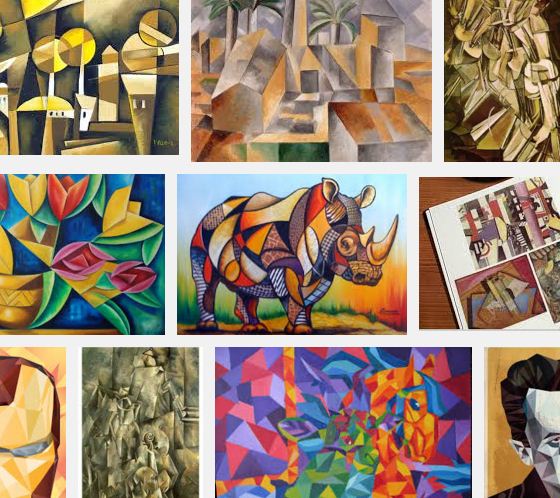
Cubism

Features surfaces of geometric planes


Expressionism

Emphasise Artist's expression of inner experiences


Fauvisim

Characterised by bright and nonnatural colors and simple forms.


Futurism

Tries to express the energy and values of the machine age.


Minimalism

Emphasised extreme simplification of form and color.


Surrealism

Uses fantastic images and incongruous juxtapositions in order to represent unconscious thoughts and dreams.


Symbolism

Tried to express abstract or mystical ideas through the symbolic use of symbols.


Buy my books at Amazon.com

Friday, 1 April 2016

Is every double Ikat a Telia Rumal


Ikat is a yarn resist technique wherein the yarns are tie-dyed, and on weaving a pattern is created on the surface of the fabric.

In single Ikat fabrics, either warp or weft is tie-dyed and woven with the other thread ( weft or warp) of solid color. In double Ikat, both warp and weft are tie-dyed according to a pre-determined pattern and then woven to create design on the fabric.

Double Ikat


Telia Rumal traditionally woven in Chirala, is originally a square constructed. However now the fabrics, or sarees are woven in this construction. A Telia -as it called today- is a double ikat construction with a typical color and design pattern.


The typical colors of Telias are Terracota red and black using natural dyes. The fabrics are mordanted with iron solution and alum so that on dyeing with alizarine, areas with iron become deep black and the ones with alum turned red.

As far as design is concerned, the layout of typical Telia comprise of a geometrical grid like patterning with borders all around, thereby creating small squares at the four corners.

There is also a confusion between Pochampally Ikat and Telia. Pochampally is a commercial application of Telia Rumal technique as well as patola technique of Gujarat. They use single, double or combined ikat techniques to produce sarees and fabric which are cost effective and popular.

Source

Buy my books at Amazon.com

Total Pageviews