Wednesday, 10 December 2014

What is Laser Cut Fabric


As the technology is evolving, newer uses of the industrial application are finding their ways into art and design. One such way is creating designs by way of laser cutting of fabrics.
http://www.hariomlaser.com/

Laser cutting is a misnomer, as the laser never "cuts" the material rather it sears, burns or evaporates the material. In the process, it also seals the edges of the material, stopping it from fraying on the process.

Hollowing

It is a trendy fashion cut that enhances the charm of the fabric. Traditionally it was done on a limited scale, but with the advent of laser cutting, is done on a grand scale.

http://www.hariomlaser.com/
Applique

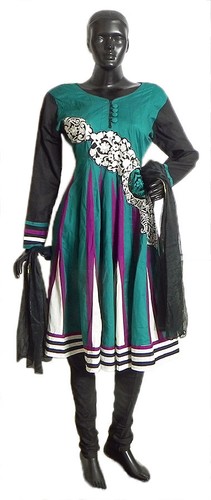
Laser cutting can also be used to create multiple layer effect applique by placing multiple pieces of fabric together, then cutting each by laser as necessary.

http://www.hariomlaser.com/
Jeans Engraving

It is a type of laser cutting, in which the top surface of the jeans is vapourised and by making the changes in the laser beam according to the requirement, an image can be generated.

http://www.hariomlaser.com/


Buy my books at Amazon.com

Monday, 8 December 2014

What is Scroop Finish


Scroop is a term used commonly as a finish with synthetic fibers and silk. 

In case of silk scroop is the crunchy feel as well as rustly sound that is produced in the fiber on use. Scroop is like the feeling of squeezing a big bag of corn starch or stepping down into a very powdery snow. 

Scroop is not an inherent property of silk. 

Scroop can be induced in silk in two ways:

One way is to leave the gum of the silk (sericin) behind and not remove it. Sericin has a high coefficient of friction and hence resists the easy sliding of fibers one over the other. Vibrations created by friction produce the sound. 

The other way is by treating silk with organic acid such as formic, lactic, citric or acetic acid in a concentration of 2-4 ml/l and drying without washing. 

In case of synthetic fibers, cohesive agents are used to increase the fiber-to-fiber friction. However, it will increase a property called scroop. The attribute is so named, because of the sound that the staple bundle makes when it is squeezed. It is caused by resistance to the fiber movement that results from the increase in friction between the fibers. If a fabric is made from a yarn having high scroop level- a harsh handle is produced. 

Reference: This is an amazing reading on silk by MIT

* By the way - Unrelated to the post- Cashmilon is made of acrylic and not nylon. 


Buy my books at Amazon.com

Saturday, 6 December 2014

Kolhapuri Chappals


Kolhapuri Chappals


http://www.kolhapurichappal.co.in/


Origin
Kolhapur, Maharashtra

Uniqueness
These chappals make peculiar sound- kar..kar..kar- while walking to attract others. This sound repels animals while walking in forests. This is done by placing a particular type of seed in the two layers of the sole to make sound. The seed is obtained from the “Vinchu” tree.

Types
There are broadly three types of the chappals on the basis of the weight

Regular
These have regular weight

Paper Kapsi
These are feather light chappals

Jada
These are thicker version of the chappals.

Technique and Limitations
1. Natural Tan is used.
2. The entire process takes about 45 days.
3. The sides are cut when the leather is still semi wet. Once the sides dry out, they shrink resulting in smaller sizes and fits.
4. The layers of the leather in the sole are attached using a unique mud from nearby river. Due to these layers sometimes separate causing discomfort.
5.  the Stiff base sometimes turns soggy in water.
6. The two sides of the toe are stitched one above the other and then pushed between the sole. Sometimes they produce discomfort.
7. Sizing is an issue, as the artisans use fingers for sizing.
8. The top and bottom sole patterns are stitched around the edges of the heel. Once the edges get frayed, the heels begin to fall off. 

Wearing-in of the Kolhapuri Chappals is always an issue. Here are some of the guidelines. These also include the care and preservation of these articles.  (Adapted from this source)


1. If the kolhapuri chapal is too tight, dip the chappal in a tap water for two seconds and remove it. This will make the leather soft and the chappal takes the shape of your foot.
2. If the chappal is stiff, apply oil with the help of cotton to soften it. 
3. It is best to use in winter and summer seasons. (Do not use in water or rainy season).
Note: This is my first post on footwear. I could not resist as these are so much tied with the overall looks of the Indian ethnic wear. I intend to write more in the future.


Buy my books at Amazon.com

Thursday, 4 December 2014

How to Preserve and Store your Precious Saris and Ethnic Dress Material-2


Storage of Textile Material

1. Avoid wood, cardboard, plastic and metal or use a heavy duty aluminium foil in between.

2. Cotton sheets can be used. But they need to washed periodically.

3. Do not use garment plastic bag, as there is no air circulation, no protection from light and plstic is non recommended.

There are two types of storage- Vertical and Horizontal

Vertical Storage

Use only that garment for vertical storage, if it is sturdy at the shoulder area.

The following are the steps depicting the storage: Source


Horizontal or Boxed Storage

Horizontal or boxed storage provides support for whole of the textile.

1. Line the box or shelf with unbleached muslin
2. Do not fold the textile. If not avoidable, pad the creases with muslin.
3. Do not stack several textiles one over the other.
4. If they are to be stacked, used acid free paper between them.
5. Store in a dark place, where there is stable heat, humidity and good air circulation.
6. Do not use Moth balls, when storing, while they discourage larvae, they are not repellent and are a suspected carcinogen.


Mending and Repairing 

The rule is always use like with like. So silk should be repaired with silk thread and cotton should be with cotton thread. One can use an inert thread such as polyester. 


Source

How to Preserve and Store your Precious Saris and Ethnic Dress Material-1


The following material is summarized from a brilliant Phd thesis submitted by Kirti Manek. 

Humidity and temperature affect textiles the most. A high relative humidity leads to the fibers absorbing water and become swollen and low relative humidity causes the fibers to give off the moisture. This leads to abrasion and in presence of dust particles it becomes even more detrimental. It can also initiate dye yellowing, bleeding and natural browning of the fiber. High humidity will lead to moth and mildew activity. 

http://shodhganga.inflibnet.ac.in/bitstream/10603/7513/14/14_chapter%203.pdf


Silica gel placed inside the cupboard can normalize the relative humidity. Quick lime lumps can also be used for dehumidification. One can also use sufficient quantity of cotton hidden inside concealed cases; cotton being hydroscopic, will absorb the moisture. All the measures as given above can reduce humidity. 

Light affects both dyes and fibers. It fades the dyes and degrades the fibers. Prevent the textiles from getting exposed to light until absolutely needed. 

Silver fish, cloth moth, cockroaches, termites are some of the insects that can damage the textile fibers. Silver fish feeds of starch present in the fibers- left over of sizing and starching. Damage by cloth moths is done by their caterpillars after coming out of eggs. Carpet beetles feed on wool and silk, they leave neat holes in the cloth with powder of the same color.Cockroaches stain the textile material with their excreta. Termites feed on anything made of cellulose. Even microbes such as fungi, algae and bacteria can discolor the textiles and reduce its performance properties. 

Use napthalene balls. One can use dhoop ( Guggal) or Ashwagandha to prevent from insects. One can use liquid insecticides and all storage drawers can be treated with those. Vacuuming the textiles and dry cleaning it will keep it free from microorganisms. 

Will continue in the next Post


Tuesday, 2 December 2014

Technical Specifications of Some Popular Synthetic Fabrics-2


Dechine Dress

Warp of dechine dress is 50/36 bright sized polyester while weft is 75/36/3150 semi dull crimp polyester. Total Ends are 6000. Reed x Pick is 80 x 3 x 80. The weight is 75 Grams per linear meter.

Fuji Chiffon

Warp of Fuji chiffon is 30/12/1000 Bright flat polyester while weft is 50/36/2800 semi dull flat polyester. Total Ends are 6100. Reed x Pick is 100x2x84. The weight is 52 Grams per linear meter.

Silver Matt

Warp of Silver Matt is 84 x 34 x 400 semi dull crimp polyester while weft is 84/34/'0' twist Semi dull crimp polyester. Total Ends are 4080. Reed x Pick is 80 x 2 x 80. The weight is 79 Grams per linear meter.

Bolting Cloth

Warp of Bolting cloth is 30/1 semi dull mono polyester while weft is same as warp. Total Ends are 7360. Reed x Pick is 280x1x140. The weight is 51 Grams per linear meter. 

Metal Chiffon


Warp of metal chiffon is 30/12/1000 Bright flat polyester while weft is 50/54/2800 cationic polyester. Total Ends are 6080. Reed x Pick is 100 x 2 x 88. The weight is 55 Grams per linear meter.

Nara Chiffon

Warp of Nara Chiffon  is 30/12/1000 Bright flat polyester while weft is 30/12/1000 Bright flat polyester. Total Ends are 6736. Reed x Pick is 104 x 2 x 92. The weight is 46 Grams per linear meter. 

Technical Specifications of a Pure Crepe Silk Saree


The following is the technical specification sheet of a pure crepe silk saree as mentioned in one of the tenders invited by Air India.

http://aviatorflight.com/worlds-best-looking-cabin-crew/

Friday, 28 November 2014

Ilkal Saree


http://www.stylefile.in/2013/10/handloomsofindia-stylefile-giveaway.html


1.These are manufactured with art silk or silk warp. They can have cotton or silk weft.

2. Body warp and Pallu are woven separately

3. The Pallu and border warp are joined in loop technique, it is locally known as Tope Teni. 

4. Weft is inserted using Three shuttle technique known as Kondi. 

5. The origin is from the town of Ilkal, in the Bagalkot District of Karnataka, India.

6. The unique feature of Ilkal saree is it's pallu that consists of contrast color (in this case red and white) alternate stripes woven in pure silk. 

7. These are worn in Northern Maharashtra and Karnataka.

8. The particular arrow border is called Gomi


http://handloomsofindia.com/purple-ilkal-saree.html

Tuesday, 25 November 2014

What is Chintz and Glaze Finish


A fabric frequently sold as dress material has a very superior luster. In India it comes from Ahmedabad. This is called Chintz.

Chintz is a 100% cotton fabric with glazed finish and multi color print. These fabrics are made of 50% polyester and 50% viscose. Ideally, a chintz fabric should have a highly twisted cotton warp intersecting a low coarse twisted cotton weft yarn. The weave should be firm.

Glaze finishing in chintz can be done in two ways. The first method is called "non durable" and the fabrics made from this method are called friction glazed. In this case the fabric is given a starch finish and then it is pressed between heated calender to produce a high luster or polish. It has a very good gloss and hand. However as the base is water soluble, it is sold as dry cleanable product.

In the durable class, the fabric is treated with resin. The resin binds the fabric with the help of cross linking.

A method to identify if a finish is of durable or non durable class is to use a drop of iodine on the fabric. If the drop turns blue it is of durable class, else non durable.

In India, prints in the style of bandhini do come with Chintz finish, have a look below:


Monday, 24 November 2014

How to Identify Uppada Jamdani Sari


http://manacheerelu.weebly.com/uppada.html


In Uppada style of weaving , the design is two sided and when the cloth is touched, the design cannot be felt separately from the cloth. That design is woven into the goods by using ada, jala and number of Tilis. There are no loose threads on either side and no dobbys or Jacquards are used. 

Saturday, 22 November 2014

Champa Silk


http://www.exportersindia.com/kosasilkkhadi/tassar-gheecha-saree-varanasi-india-270805.htm
Origin

Champa, Chhatisgarh, India

Fiber

There are seven varieties of Kosa silk i.e.
(1) Shukinda
(2) Dabha
(3) Jadav Dabha
(4) Ranad
(5) Railly
(6) Lariya
(7) Bhrafvala

Railly, Lariya and Barf cocoons are found naturally in the forest collected by the forest dwellers mainly the tribals.

The threads which come from Rally cocoons are generally black in colour while others are yellowish or creamish.

Yarn

Ghicha: Ghicha yarn is produced out of those cocoons, out of which live worm has come out. In the process, the cocoon is damaged and one cannot get a continuous filament. In such cases the cocoons are boiled with soap solutions and several filaments are joined and reeled. This process creates a yarn called as Ghicha and is characterized by its very typical coarseness.  


Katiya: After making the yarn from Gheecha process, some quantity of waste material remains in the cocoons. This waste material then cut together into finer pieces and then reeled into yarn. This yarn is called Katiya.

Nassi: Before making cocoon, the larva joins it with the help of a stem like structure. This structure also contains filaments. However, this is quite stiff. It has to be soaked and boiled in a soft solution and beaten with wooden hammer till it becomes soft. Then it is reeled on thigh in the form of yarn and out of which the fabric is made which is characterized by its typical softness. However, this yarn is costly as a large number of stems are needed to make the fabric.  

Technique

The looms being used now are mostly fly shuttle pit looms though there are some throw shuttle looms in Raigarh

The three shuttle technique is to be found in most Kosa silk areas

Sizing is done by hand with the help of brushes, specially meant for this purpose.

The loss of Sericin during reeling can be off set by what is known as ‘weighting’ or loading, which adds to the volume and weight of raw silk, as also adds to the luster and rustle of silk. In Chhattisgarh, weighting is a compulsory process which is done during the process of sizing, especially for fabrics like ‘Korahs’, undegummed and unbleached fabrics. The weighting is done with starch normally cooked rice water. This is applied to wet the warp and weft yarn during weaving

In the cottages of the weavers a usual warp is of one piece length i.e. one sari, or one piece of malmal of 6 yards or safa of 9 yards.

Surface Ornamentation

The Phera indicates the meaning of ‘round’. Phera method of weaving the body of saree and its border weft threads has rounded each other. The body weft threads are not interlacing with border warp threads and vice versa. They are interlaced by rounding each other at the point of body and border following the phera method. The designs are made using the jhala, jacaurd and dobby.


Uniqueness

The designs are prepared with the dexterous process of Dobby system& there is also no use of jacquard.

References

Saturday, 15 November 2014

What is Parsi Work Gara Saree


What is Gara Saree

Gara Sarees are worn by Parsi women. Gara sarees are treated as treasure and passed down from one generation to the next. The embroidery on Gara sarees is called Gara embroidery and it defines Parsi work. It is done by hand, and often covers the full face.

Gara Sarees and embroidery was earlier imported from China. The motifs are quintessentially Chinese.

Corner Detail of the Gara Saree: http://www.heritageinstitute.com/zoroastrianism/parsi/gara.htm
Traditionally the embroidery is done on the saree itself. However, now borders are used and patched on the saree. These are called 'Kor' borders.

http://www.heritageinstitute.com/zoroastrianism/images/gara/kor.jpg

Garas are traditionally done on Gajji Silk or Gaaj, a thick handwoven silk satin fabric.

Gara inspired collection are now everywhere, the patches are attached in Anarkalis and Jackets. That will only increase the value of the authentic pieces.

http://i.ebayimg.com/00/s/OTAwWDM3OQ==/z/e8cAAOSwGvhT~ug2/$_12.JPG

Visit our webstore at velvetkart.com

Sunday, 9 November 2014

A Note on Bandhini Motifs


Bandhini, which is a technique of tying-and-dyeing is practiced in some form or the other in most of the parts of the country. Here is a small guide to knowing what all the patterns and motifs for the dotted Bandhini practiced in Rajasthan are called as:

Womenswear Measurements - Some Thumb Rules


1. Relationship between Across Front, Across Back and Across Shoulder

Here Across front is taken at mid armhole. The three measurement taken together are used to draft and gauge armhole shape.

For woven fabric Across front should be 1.5" less than Across shoulder and Across Back should be 0.5 inches less than the Across shoulder.

2. Back and Front Armhole

The Back Armhole should be 1/2 to 5 1/8" bigger than the front Arm Hole

3. Front and Back Neck Width

Back Neck width is 1/2 inches bigger than the front neck width.

Read the full article here and here


Visit our webstore at velvetkart.com

Wednesday, 8 October 2014

New Book on Dyeing- Why Turquoise Bleeds


Why Turquoise Bleeds?
Essential Dyeing Knowledge for the Merchandisers
A Book By

Priyank Goyal


This book takes the reader through intricacies of understanding deing from a very beginner level. It covers all dye classes and their practical implications for the merchandiser.

Order Here


Product details

  • Format: Kindle Edition
  • File Size: 779 KB
  • Print Length: 75 pages
  • Simultaneous Device Usage: Unlimited
  • Publisher: Priyank Goyal; 1 edition (6 October 2014)
  • Sold by: Amazon Digital Services, Inc.
  • Language: English
  • ASIN: B00O8ZSVI6

There is a dearth of books in the market that can help merchandisers in understanding the basics of dyeing especially those who are not from the textile background. This book is an attempt towards fulfilling that gap. The author has tried as far as possible to keep the book away from the technical and chemical jargon and tried to present the material in the way that a layman who is introduced to this trade would understand. 
This book can be taken as a complement to his other book for the merchandisers “Who is Mangalgiri? Essential Fabric Knowledge for the Merchandisers”, also published by Amazon. Apart from merchandisers, this book is suitable for students, teachers, traders, buyers, sellers and managers. 
The first chapter “An introduction to Dyes and Classes of Dyes” clarifies the concepts related to dyeing. It introduces gently the readers to various dye classes such as direct, reactive, vat and others and their distinguishing properties. 
The second chapter “A Few Details about dye classes” takes the reader through the details of the various dye classes such as the fibers they can be applied on, the method of application and the properties related to of those dye classes. It introduces in details the various terms related to the colorfastness of dyes. 
The third chapter “Dyeing from Fiber to Garment Stage” takes the reader through the details of dyeing at various stages of textile chain, their advantages and the process of application. 
The fourth chapter “Coloring by Pigments” introduces the concept of pigments, how they are different from dyes and their various methods of application. 
The fifth chapter “Some practical notes for the merchandisers” takes the reader through the practical and commercial aspects of dyes, how to identify them in practical settings and other related issues. 
The sixth chapter “Natural Dyes” introduces the concept of natural dyes, how these are different from the synthetic dyes. Their advantages and limitations and some commonly used natural dyes. 
The seventh chapter “Dyeing with Indigo” takes the reader into details regarding indigo dyeing, the method and process of application and especially its use by the handloom weavers. 

Visit our webstore at velvetkart.com

Monday, 6 October 2014

New Book-Compound Fabric Structure- Simplified


Compound Fabric Structure -Simplified !

A Step-by-Step Approach

A Book by 

Priyank Goyal

This book introduces the concepts of compound fabric structure in a very gentle way. A complement to the earlier book "Fabric Structure- Simplified", this takes the reader through the fabric structure variations in fabrics such as damasks, tapestries, brocades, terry pile, velvet, plushes, double cloth, and backed fabrics. A must for textile designers, this book is equally useful for textile technologists and textile chemists in understanding the complexity of these weaves in a simplified manner.

Order Here


Visit our webstore at velvetkart.com

Tuesday, 30 September 2014

Dokra or Dhokra Jewellery


This is an art of metal practiced by tribals of west Bengal and Orissa. The metal used is usually brass. The technique is basically a low wax casting. This technique is ages old going back to the Indus Valley Civilization.

The name for this technique comes from the Dhokra Damar Tribes in the regions of Orissa. In this technique, the core is developed using clay or wax. Then it is covered with wax and the figure is engraved on it and then covered with layer after layer of clay.

The molten metal is then poured. The wax gets melted and then comes out from the holes meant for this purpose. 
Visit our webstore at velvetkart.com

Tuesday, 23 September 2014

New Book - Who is Mangalgiri- Essential Fabric Knowledge for Merchandisers


I take it a great pleasure to announce the arrival of my new book on Kindle. I am getting recurrent queries from readers who want the basic textile knowledge. I have conducted several sessions with store managers, buyers and merchandisers, who wished to have some basic book explaining all the relevant terms related to fabrics. I myself have struggled a lot when buying fabrics, as the terminologies are very different than those taught in textbooks of textile technology. 

It is said that merchandising is all about merchandise and the “ing” part is “right time, right place, and right cost. Thus It seems imperative that the merchandisers in the apparel trade should know about the merchandise, the building block of apparels, the fabrics.
This book is aimed at the industry professionals who are in this trade but are from a non-textile background and who want to know about fabrics. However this is equally useful for managers who are new in this trade and textile enthusiasts. 
Most of the other books dealing with fabrics are written in complex language and give more than necessary information about fabrics. In the process they go sometimes too technical and difficult to read. This book is an attempt to bridge the gap and help even novice to learn the tricks of trade very easily.
Every chapter starts with a day in the life of a merchandiser and these situations are used in this book to help learning, situations that the merchandisers learn in this trade day-in and day-out.
Special emphasis is made to cover Indian ethnic and Indian common fabrics, these are not found anywhere in this context. These fabrics have their own peculiar characteristics which make them unique to define.

I hope this book will fill a void which was long awaited to be filled.
Visit our webstore at velvetkart.com

Friday, 19 September 2014

Phoolpatti (Phulpatti) Work of Aligarh


In Phool Patti work, flower and leaf patterns are applied using cloth as patch work. Here small pieces of fabric are cut into different sizes and shapes. These are then folded and made into various petals and leaves. Finally they are stitched into the fabric with a hemstitch.


Fabrics like organdy, organza, kota and voile are used as the base and figures. Gold and Silver shimmer fabrics are also used for applique.

For stitching, machine threads are used, for ornamentation, Anchor threads are used. Badlas and Mukaish are also used sometimes to have some glitter.


Different shapes of leaves such as Badi patti, Dil Key phool ( Heart Shaped flowers), Gol patti or choti patti are used. 
Visit our webstore at velvetkart.com

Thursday, 18 September 2014

Pipli Applique


Applique is the application of the patch work on a base cloth. Orissa is known for its applique work. Previously this wok was carried out by professional tailors or "darjis". Later on the applique work was taken to Puri where it is used as canopy and flags along with other decorative work.

Any applique has a foundation on three elements: stitches, stripes and patchwork. Stitches are used to attach the stripes ( or patches) on the foundation fabric so as to create the patchwork, which is described in terms of various motifs.

The most common stitch in the applique is the chain stitch. Various stripes such as Phula patti or Sadha patti are used to create motifs. Motifs can be animals, fish, flowers, birds or trees.

Over time their have been changes in the craft. Various modern articles such as bags and kushan covers have been done in this craft. There is a very good demand of these products in the Indian and International markets.

References
Visit our webstore at velvetkart.com

Wednesday, 17 September 2014

Notes on Indian Embroidery-1


1. Indian Embroidery is as old as gold. There are some great examples of embroideries found in the remnants of Indus Valley Civilization. 


2. Floral motifs in the embroidery were introduced by Mugals and persians. Brefore that thre were geometrical designs. There is a marked similarity in the embroidery found in the embrodiery depicted on frescos of Ajanta and Phulkari. 

3. Phulkari can be classified basis regions. Some examples are embroideries from Kashmir and Chamba Rumal of Himachal Pradesh from the Northern regions. From Eastern region, Kantha and Satgaon quilts from Bengal and applique work from Orissa are notable examples. From Western region, Kutch produces exquisite embroideries, Punjab Phulkaries and Rajasthan produces gota and applique work. From Ganges Valley, Bihar produces Kashida and Katwa work as well as Rumals depicting Mithila. Uttar Pradesh produces Zardozi, Phulpatti and Chikankari. From South India, Karnataka produces Kasuti and Andhra produces Banjara embroidery. 

4. Indian embroidery can be broadly classified as court embroidery- patronized by the royal court, Trade embroidery, Temple embroidery and Folk embroidery. Zardosi, chikankari are some of the examples of it. Examples of trade embroidery are mochi bharat, kashmir embroidery. chikankari, Satgaon quilts, chinai work. Examples of folk embroidery include that from Mithila, Kutch. Temple embroideries involve that done on Pichhwai, chamba rumals and Orissa.

5. Broadly Indian embroidery can be divided into silk embroidery, quilting, counted thread work, white work-phulpatti and chikankari, mirror work, gold and silver embroidery, applique and patch work and gold and silver ribbon work ( Badla).
Visit our webstore at velvetkart.com

Total Pageviews